
The Fed’s preferred inflation measure came in slightly hotter than expected in July, adding another reason for policymakers to remain cautious about interest rates.
The core PCE price index, which excludes volatile food and energy prices, rose 0.2% from June and 3.3% from a year earlier. Headline PCE inflation also increased 0.2% for the month and remained at 3.7% annually, according to the Bureau of Economic Analysis.
The numbers matter because the Fed closely watches core PCE when judging underlying inflation. At 3.3%, core inflation remains clearly above the central bank’s 2% target, suggesting price pressures have not cooled enough to give policymakers an easy path toward lower rates.
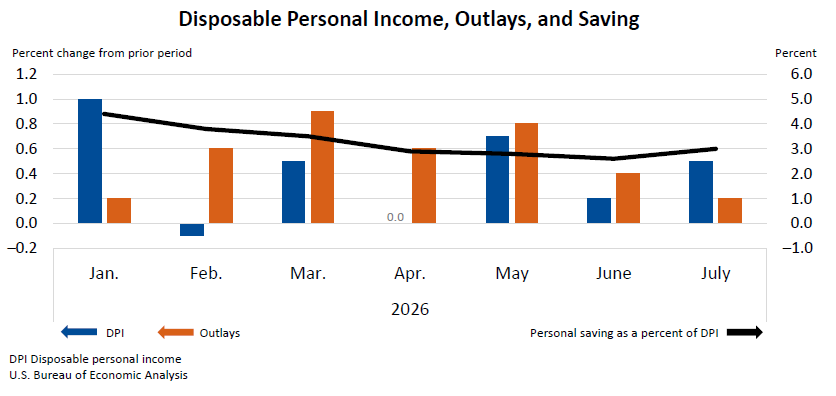
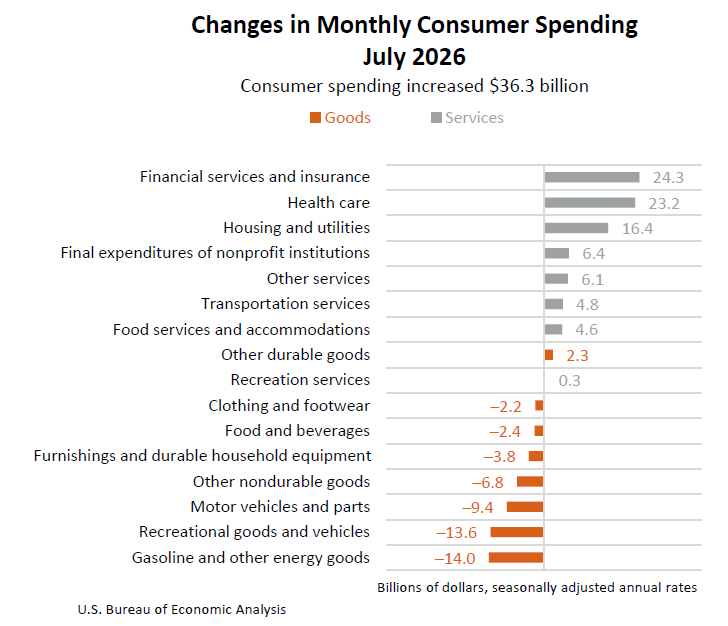
There was also evidence that consumers are becoming more cautious. Consumer spending rose just 0.2%, while inflation-adjusted spending was essentially unchanged. Meanwhile, personal income increased 0.4%, disposable income rose 0.5%, and the personal saving rate climbed to 3.0%.
Investor takeaway: July’s inflation report was not dramatically worse than expected, but it was still too warm for the Fed to declare victory. Persistent core inflation could keep interest rates higher for longer, making upcoming labor and inflation data particularly important for stocks, bonds and the dollar.
Source: CNBC
Disclosure: This article does not represent investment advice. The content and materials featured on this page are for educational purposes only.
Related: Bitcoin and Gold ETFs Draw $7 Billion as Investors Bet on Scarcity