
Andy Jassy signals Amazon is no longer just competing, it’s building its own ecosystem to challenge the biggest names in chips, cloud, and space.
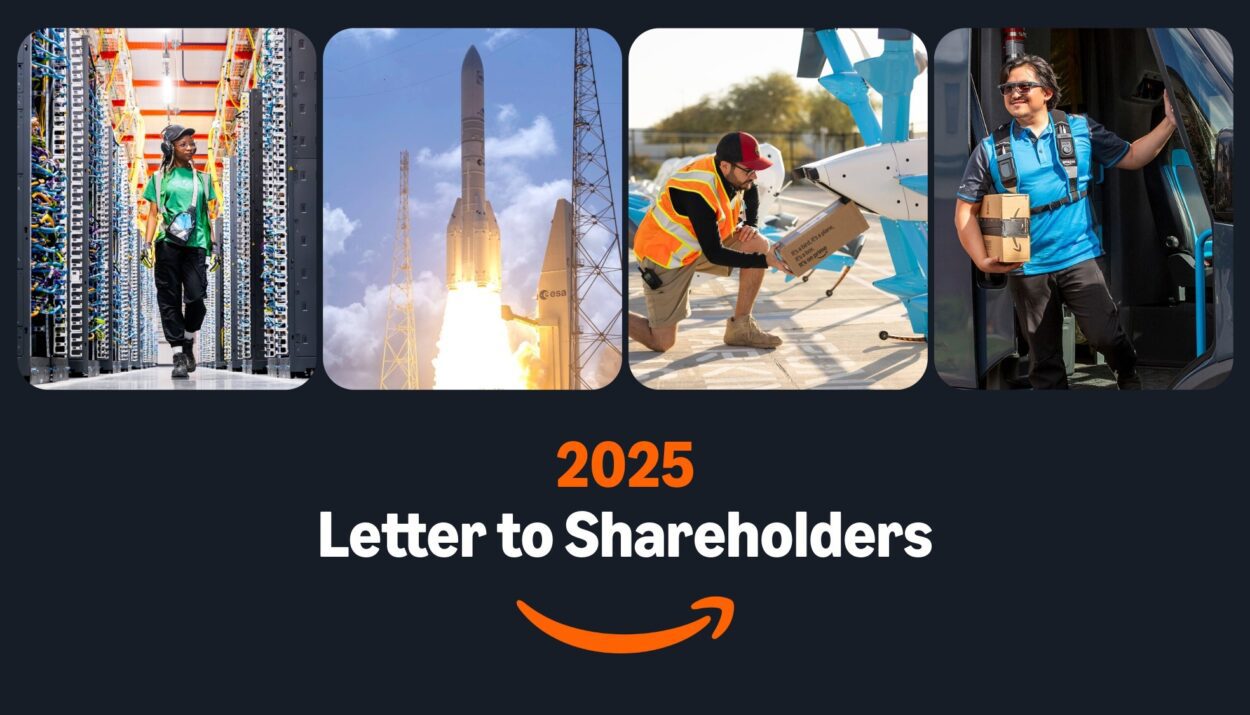
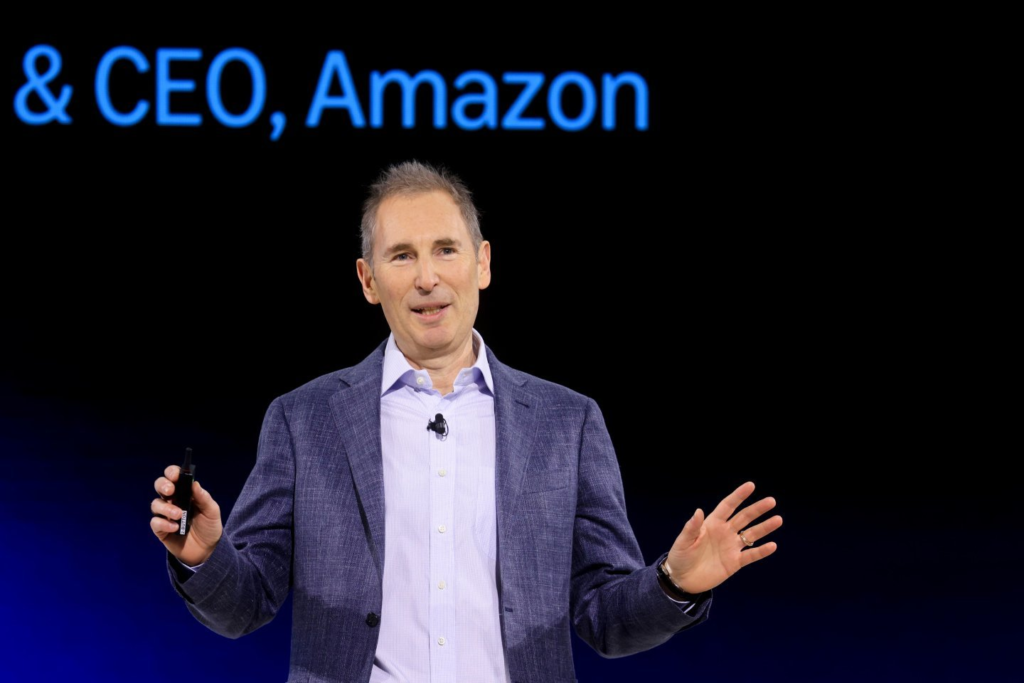
Amazon CEO Andy Jassy used his annual shareholder letter to send a clear message: the company is stepping deeper into AI, hardware, and infrastructure, and it’s ready to compete directly with industry leaders like Nvidia, Intel, and even Starlink.
The tone wasn’t aggressive on the surface, but the strategy underneath was unmistakable. Amazon is no longer just a customer of these technologies. It wants to replace them.
Amazon vs Nvidia: “A new shift has started”
Jassy acknowledged Amazon’s strong partnership with Nvidia, whose chips still dominate AI workloads today. But he made it clear that things are beginning to change.
Most AI systems have relied on Nvidia hardware so far, but Amazon is pushing its own chips as a cheaper and more efficient alternative.
Its Trainium AI chips are seeing explosive demand:
- Trainium2 is already sold out
- Trainium3 capacity is nearly fully booked
- Even Trainium4, which is still 18 months away, is already partially reserved
This momentum has pushed Amazon’s chip business to a $20 billion annual run rate, with Jassy suggesting it could be even larger if fully commercialized.
For now, Nvidia remains dominant, generating over $200 billion in annual revenue. But Amazon is positioning itself as a serious long-term challenger.
Pressure on Intel: Graviton gains ground
Amazon is also quietly taking share from Intel. Its Graviton CPUs, designed in-house, are now widely used across AWS. According to Jassy, 98% of the top 1,000 EC2 customers are already using Graviton chips.
Demand is so strong that some companies even asked to buy all available capacity for 2026, requests Amazon had to decline. That tells you one thing: customers are actively looking for alternatives to traditional chip providers.
A Starlink rival is already taking shape
Amazon is also entering the satellite internet race with its own project, Amazon Leo, expected to launch in mid-2026. And it’s not starting small.
Jassy revealed that Amazon has already secured major contracts with companies like Delta, AT&T, Vodafone, and even NASA. The company also has over 200 satellites already in orbit, signaling real progress before the official launch.
This puts Amazon in direct competition with SpaceX’s Starlink in a market that could define global connectivity.
AI spending is massive and intentional
At the center of everything is one key decision: Amazon is going all-in on AI infrastructure.
The company plans to spend around $200 billion in capital expenditures in 2026, mostly on AWS data centers and AI capacity. That’s one of the largest investment plans in tech history.
Jassy defended this aggressively, saying the company isn’t making a blind bet. He pointed to long-term agreements, including a deal where OpenAI plans to spend up to $100 billion on AWS. He also hinted that more large deals are already signed or in progress, even if they haven’t been publicly announced yet.
Beyond AI: robots, delivery, and groceries
While AI dominated the letter, Jassy also highlighted how Amazon is expanding across its broader ecosystem:
- Over 1 million robots are now operating in warehouses
- The company is investing $4 billion to expand rural delivery
- Its grocery business reached $150 billion in sales in 2025
He even suggested Amazon could eventually turn its robotics capabilities into standalone products, possibly selling automation solutions or even consumer robots in the future.
Amazon’s strategy is becoming clearer. Instead of relying on partners, it is building its own chips, its own infrastructure, and even its own satellite network. That means higher upfront costs, but also greater long-term control.
Jassy also addressed concerns about an AI bubble, acknowledging the debate but dismissing it for Amazon’s case. From his perspective, demand is real, growing, and already locked in through major customer agreements.
For investors, the message is simple: Amazon isn’t just participating in the AI boom. It’s trying to own as much of the stack as possible.
Disclosure: This article does not represent investment advice. The content and materials featured on this page are for educational purposes only.