
India is preparing to sharply reduce tariffs on car imports from the European Union as part of a major free trade agreement expected to be announced this week, according to sources familiar with the negotiations.
Under the plan, India will immediately lower duties on a limited number of European cars priced above 15,000 euros to 40%, down from current levels that range between 70% and 110%. Over time, those tariffs are expected to fall further to 10%, marking the most significant opening of India’s auto market to foreign manufacturers.
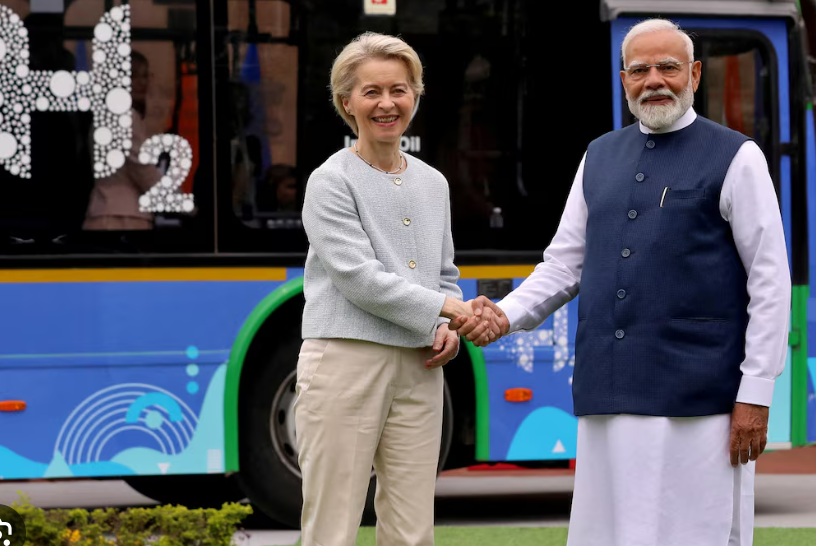
Officials from India and the EU are expected to announce the conclusion of the long running trade talks on Tuesday, in what has been dubbed the “mother of all deals.” The pact is expected to boost bilateral trade and help Indian exporters recover from the impact of recent US tariffs on textiles and jewellery.
The initial tariff cut is expected to apply to approximately 200,000 combustion engine cars per year, according to one source. Battery electric vehicles will be excluded from the reductions for the first five years to protect domestic EV investments by companies such as Tata Motors and Mahindra & Mahindra. After that period, EVs would be brought under the same tariff regime.
The move is a major win for European automakers including Volkswagen, Renault, Stellantis, Mercedes Benz and BMW, which have struggled to expand in India because of high import duties. European brands currently hold less than 4% of India’s 4.4 million unit car market, which is dominated by Suzuki, Tata and Mahindra.
Lower tariffs would allow foreign manufacturers to offer imported models at more competitive prices and test demand before committing to larger local production investments.
India is the world’s third largest car market after the US and China, and sales are expected to grow to 6 million vehicles a year by 2030. Several European companies are already preparing new investment plans as the country opens its market further.
If finalized as expected, the deal would mark one of the most significant trade liberalization steps in India’s auto sector in decades and reshape competition in one of the world’s fastest growing car markets.
Disclosure: This article does not represent investment advice. The content and materials featured on this page are for educational purposes only.
Related: What to Watch This Week in Markets: Fed Day, Big Tech “Show Me” Earnings