

Choosing the right investment strategy can sometimes feel like an overwhelming responsibility, especially as your financial future takes center stage. Many mid-career professionals want more than just basic investment tips—they seek expert insights on building wealth, planning for retirement, and protecting their families against unexpected changes. A skilled financial advisor offers specialized guidance and ongoing support, helping you make decisions with greater clarity and confidence.
Table of Contents
- What Is A Financial Advisor’s Role?
- Types Of Financial Advisors Explained
- How Advisors Create Personalized Strategies
- Risk Management And Wealth Protection Benefits
- Fees, Costs, And Value Compared
Key Takeaways
| Point | Details |
|---|---|
| Role of Financial Advisors | Financial advisors provide personalized guidance and develop comprehensive strategies tailored to individual financial landscapes. |
| Types of Advisors | Different financial advisors, such as RIAs and brokers, have unique service offerings, regulatory standards, and compensation structures. |
| Personalized Strategies | Advisors create tailored financial strategies through a thorough understanding of clients’ financial situations and goals. |
| Fees and Value | Understanding various compensation models is crucial for evaluating the true cost and potential return on investment in financial advisory services. |
What Is a Financial Advisor’s Role?
A financial advisor serves as a strategic partner in managing your financial journey, providing personalized guidance to help you make informed decisions about money management and wealth building. Personal financial advisors are professional experts who assess your current financial situation, understand your long-term goals, and develop comprehensive strategies tailored to your unique needs.
These professionals play a multifaceted role that extends far beyond simple investment recommendations. They analyze your entire financial landscape, which includes evaluating investment options, planning for retirement, managing tax strategies, recommending insurance products, and creating robust financial plans. By working directly with clients, advisors help individuals navigate complex financial decisions, offering specialized expertise in areas like retirement planning, wealth management, and risk mitigation.
Financial advisors typically work through a structured process that begins with an in-depth assessment of your financial health. They’ll review your income, expenses, assets, liabilities, and long-term objectives. Based on this comprehensive evaluation, they develop personalized recommendations that might include diversifying investment portfolios, establishing tax-efficient savings strategies, planning for major life events, and creating contingency plans for potential financial challenges.
Pro tip: Schedule an initial consultation with a potential financial advisor to assess their expertise, communication style, and alignment with your financial goals before committing to a long-term partnership.
Types of Financial Advisors Explained
Financial advisors come in various specialized forms, each designed to address different aspects of personal financial management. Insurance agents, registered representatives, and registered investment advisors represent distinct professional categories with unique roles, regulatory standards, and service offerings that cater to specific financial needs.
The most common types of financial advisors include registered investment advisors (RIAs), who are held to a fiduciary standard and must prioritize client interests, brokers who buy and sell securities, and insurance agents focused on recommending protection products. Some advisors specialize in specific areas such as retirement planning, tax strategy, or wealth management. Financial professionals carry multiple credentials that demonstrate their expertise, including Certified Financial Planner (CFP), Certified Public Accountant (CPA), and Enrolled Agent designations.
Understanding the differences between these advisor types is crucial for selecting the right professional for your financial goals. RIAs typically provide comprehensive financial planning and ongoing investment management, brokers focus more on transaction-based securities trading, and insurance agents specialize in risk management through various insurance products. Each type has distinct compensation structures, regulatory requirements, and professional standards that impact the quality and nature of financial advice they can provide.
Here’s a comparison of common financial advisor types and their core characteristics:
| Advisor Type | Regulatory Standard | Typical Services | Compensation Model |
|---|---|---|---|
| Registered Investment Advisor (RIA) | Fiduciary (client-first) | Comprehensive planning, investment management | Percentage of assets, fee-only |
| Broker | Suitability (product-fit) | Securities trading, basic advice | Commissions, transaction fees |
| Insurance Agent | Product suitability | Insurance products, risk mitigation | Commissions on insurance |
| Certified Financial Planner (CFP) | Fiduciary (client-first) | Holistic financial planning | Fee-only, or mixed model |
Pro tip: Request and review an advisor’s professional credentials, regulatory registration, and fee structure before establishing a working relationship to ensure they match your specific financial planning needs.
How Advisors Create Personalized Strategies
Financial advisors develop personalized strategies through a meticulous process of understanding each client’s unique financial landscape. Advisors begin by interviewing clients to gather comprehensive information about their income, expenses, current insurance coverage, tax situation, and long-term financial objectives. This initial deep-dive assessment serves as the foundation for crafting a tailored financial roadmap that addresses individual needs and aspirations.
The strategy development process involves detailed analysis and sophisticated financial modeling. Advisors carefully evaluate multiple factors, including risk tolerance, investment objectives, and personal circumstances to recommend precise strategies. Personalized investment plans typically encompass comprehensive approaches such as asset allocation, investment selection, tax optimization, and ongoing portfolio management. These strategies are not static documents but dynamic frameworks designed to evolve with the client’s changing life circumstances and broader economic conditions.

Key components of personalized financial strategies often include retirement planning, investment portfolio construction, risk management, tax efficiency, and estate planning. Advisors leverage their expertise to create holistic approaches that integrate multiple financial disciplines. They continuously monitor and adjust recommendations, ensuring that the financial plan remains aligned with the client’s goals, adapting to life transitions, market shifts, and personal financial evolution.
Pro tip: Request a comprehensive written financial plan that clearly outlines your advisor’s proposed strategies, including specific recommendations, potential risks, and expected outcomes to ensure complete transparency and alignment with your financial goals.
Risk Management and Wealth Protection Benefits
Financial risk management represents a critical advantage of working with a professional financial advisor, providing comprehensive strategies to protect and preserve your hard-earned wealth. Advisors act as strategic guardians, developing tailored approaches that shield clients from potential financial vulnerabilities through sophisticated risk mitigation techniques. These professionals analyze potential threats to your financial stability, creating robust defense mechanisms against market volatility, unexpected life events, and economic uncertainties.
The wealth protection process involves multiple sophisticated strategies designed to minimize financial exposure. Advisors recommend comprehensive approaches including diversified investment portfolios, strategic insurance coverage, and proactive tax planning. Risk assessment and mitigation help clients understand and navigate potential financial challenges, ensuring a more secure and predictable financial future. These strategies go beyond simple asset protection, focusing on creating resilient financial frameworks that can withstand economic fluctuations and personal life transitions.
Key components of effective wealth protection include developing emergency funds, creating balanced asset allocations, implementing comprehensive insurance strategies, and establishing estate planning mechanisms. Financial advisors bring specialized expertise in analyzing potential risks unique to each client’s financial situation, recommending customized solutions that address individual vulnerabilities. Their proactive approach helps clients not just protect their current assets but also build long-term financial resilience, transforming potential financial threats into opportunities for strategic growth and stability.
Pro tip: Schedule an annual comprehensive financial risk assessment with your advisor to identify and address potential vulnerabilities in your financial strategy before they become significant challenges.
Fees, Costs, and Value Compared
Financial advisor fee structures represent a complex landscape of compensation models that directly impact the value and transparency of financial guidance. These compensation approaches range from commission-based systems to fee-only structures, each with unique implications for client relationships and potential conflicts of interest. Understanding these fee models is crucial for making informed decisions about the true cost and potential return on investment when seeking professional financial advice.
The most common fee structures include percentage-based asset management fees, hourly consulting rates, flat annual fees, and commission-based compensation. Percentage-based models typically charge between 0.5% to 1.5% of total assets under management annually, providing ongoing advisory services and portfolio management. Commission-based advisors earn money through product sales, which can potentially create inherent conflicts where recommended investments may not always align perfectly with client interests. Fee-only advisors offer a more transparent approach, charging predetermined rates that eliminate potential bias and ensure recommendations are purely based on client needs.
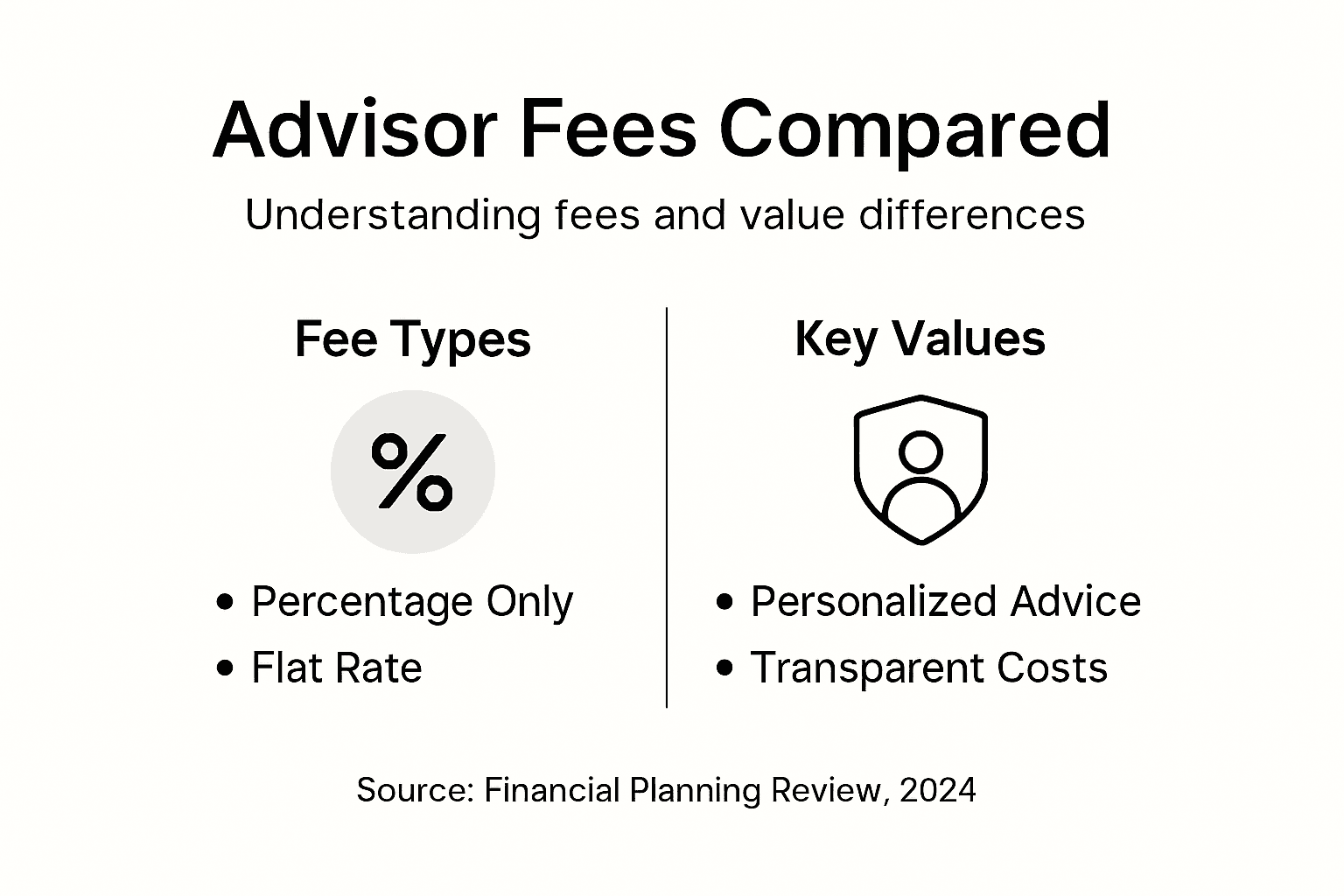
When evaluating the value of financial advisory services, investors should look beyond raw cost calculations and consider the comprehensive benefits. A skilled advisor can potentially generate returns that significantly outweigh their fees through strategic investment selections, tax optimization, risk management, and long-term financial planning. Sophisticated advisors help clients avoid costly mistakes, provide emotional discipline during market volatility, and create personalized strategies that adapt to changing life circumstances, ultimately delivering value that extends far beyond simple investment transactions.
Below is a summary of key factors to consider when evaluating a financial advisor’s value:
| Evaluation Factor | Why It Matters | Potential Impact |
|---|---|---|
| Compensation Transparency | Ensures unbiased recommendations | Reduces client conflicts |
| Professional Credentials | Indicates advisor expertise | Builds client trust |
| Fee Structure | Affects total client cost | Influences service quality |
| Ongoing Monitoring | Adapts strategies to client changes | Enhances long-term returns |
Pro tip: Request a comprehensive fee breakdown and clear explanation of how your advisor’s compensation model might influence their recommendations before establishing a professional relationship.
Unlock the Full Benefits of Professional Financial Advice Today
Navigating the complexities of financial planning can feel overwhelming. Many individuals struggle with creating personalized strategies that address risk management, retirement planning, and tax efficiency. This article highlights how a trusted financial advisor acts as your strategic partner, helping you build a secure future by tailoring solutions that fit your unique goals and circumstances. If you want to avoid costly mistakes and gain peace of mind with clear, transparent guidance, now is the time to explore expert assistance.
Take control of your financial future by connecting with trusted professionals who prioritize your needs and deliver comprehensive plans designed to protect and grow your wealth. Discover more insights and get started by visiting finblog.com. When you are ready to protect your assets and maximize opportunities, explore how a personalized approach to financial advising can transform your financial journey. Visit finblog.com and request a consultation to take the first step toward securing your tomorrow.
Learn how to identify the right advisor and understand fee structures by reviewing essential guidance at Benefits of Financial Advisor: Securing Your Future. Empower yourself with knowledge, act now, and ensure your financial goals stay on track with professional support.
Frequently Asked Questions
What are the primary benefits of working with a financial advisor?
Working with a financial advisor provides personalized guidance, comprehensive financial strategies, risk management, and the expertise needed to make informed financial decisions that align with your long-term goals.
How do financial advisors create personalized strategies for clients?
Financial advisors develop personalized strategies by conducting in-depth assessments of a client’s financial health, understanding their goals, and leveraging sophisticated analysis to recommend tailored investment plans, risk management techniques, and overall financial roadmaps.
What types of financial advisors are available, and how do they differ?
There are various types of financial advisors, including registered investment advisors (RIAs), brokers, and insurance agents. RIAs operate under a fiduciary standard, focusing on comprehensive planning, while brokers are transaction-based, and insurance agents specialize in risk management products.
How are financial advisors compensated, and what should I consider regarding fees?
Financial advisors may use different compensation structures, including fee-only models, commission-based models, or a mix. It’s important to understand how these fees could affect the financial advice provided and to assess the overall value of the services offered.
Recommended
- Role of Financial Advisors – Impact on Your Wealth – Finblog
- Benefits of Financial Advisors: Maximizing Wealth Outcomes – Finblog
- What is a Financial Plan? Understanding Its Importance – Finblog
- Financial Security Tips for Achieving Long-Term Stability – Finblog
- Top Estate Planning Attorney Marketing Strategies for 2025
- Drivers of Digital Transformation in the Insurance Industry – Digital Insurance Platform | IBSuite Insurance Software | Modern Insurance System