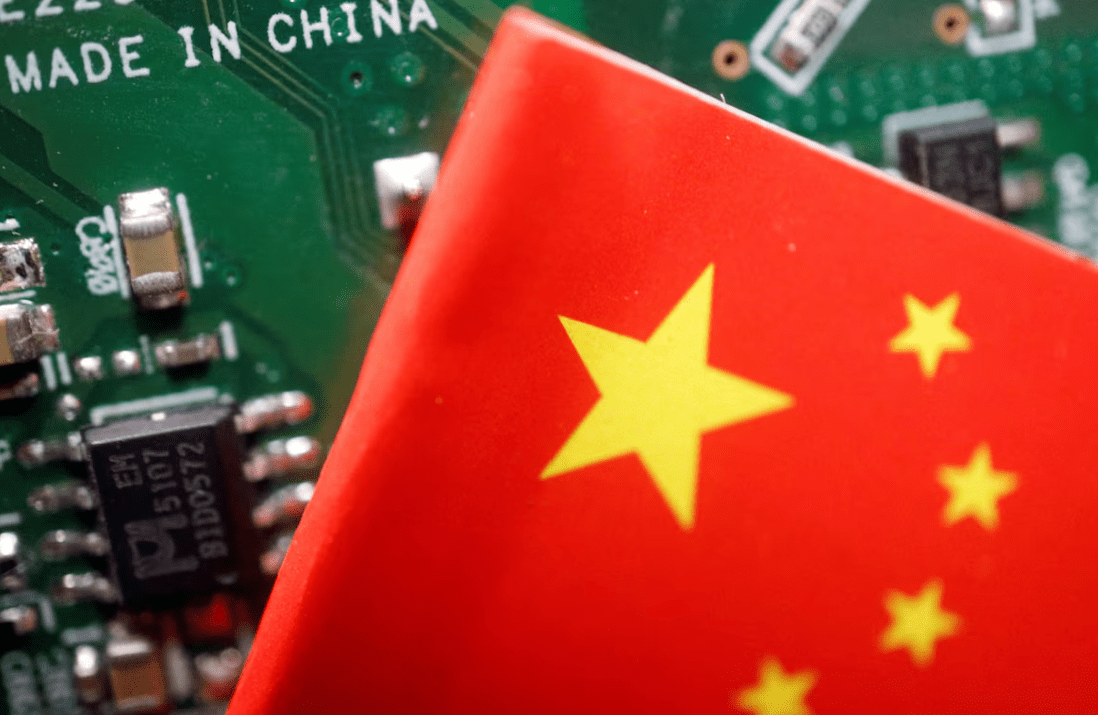

China has built a working prototype of an extreme ultraviolet (EUV) lithography machine, a technology long controlled by the West, marking a major step toward semiconductor self-sufficiency, according to a Reuters investigation.
Sources say the prototype was completed in early 2025 inside a high-security laboratory in Shenzhen and is now undergoing testing. The machine can generate extreme ultraviolet light, the critical component needed to produce the most advanced chips used in AI systems, smartphones, and military hardware. It has not yet produced working chips.
The project was developed by a secretive team that includes former engineers from ASML, the Dutch firm that currently monopolizes EUV technology worldwide. China is officially targeting 2028 to produce functioning chips, though people close to the effort say 2030 is a more realistic timeline.
The initiative is part of a six-year government program backed by President Xi Jinping, which is coordinated through China’s central science and technology leadership, with Huawei playing a central role in chip design, equipment development, and manufacturing. Sources describe the effort as China’s version of the Manhattan Project due to its scale, secrecy, and national security importance.
China’s progress comes despite years of US-led export controls designed to block access to EUV systems and advanced semiconductor tools. The prototype reportedly relies on salvaged components from older machines, secondhand markets, and domestic substitutes that still trail Western precision, particularly in optics.
If successful, the program could dramatically narrow the technology gap with the US and its allies, reshaping the global semiconductor landscape and weakening the impact of export restrictions that have defined the tech rivalry in recent years.