President Donald Trump’s claim that Venezuela stole oil from the United States is not about current oil shipments or recent contracts. It is about history, nationalisation, and power over resources.
US oil companies played a major role in developing Venezuela’s oil industry in the early 1900s. Firms like Standard Oil, Exxon and ConocoPhillips invested capital, technology, and expertise when Venezuela was becoming one of the world’s top oil producers. For decades, US companies dominated production under concession agreements.

That changed in 1976, when Venezuela nationalised its oil industry and created the state-owned company PDVSA. The move was widely supported inside Venezuela and reflected a global trend at the time. Countries like Saudi Arabia and Mexico did the same to take control of their natural resources.
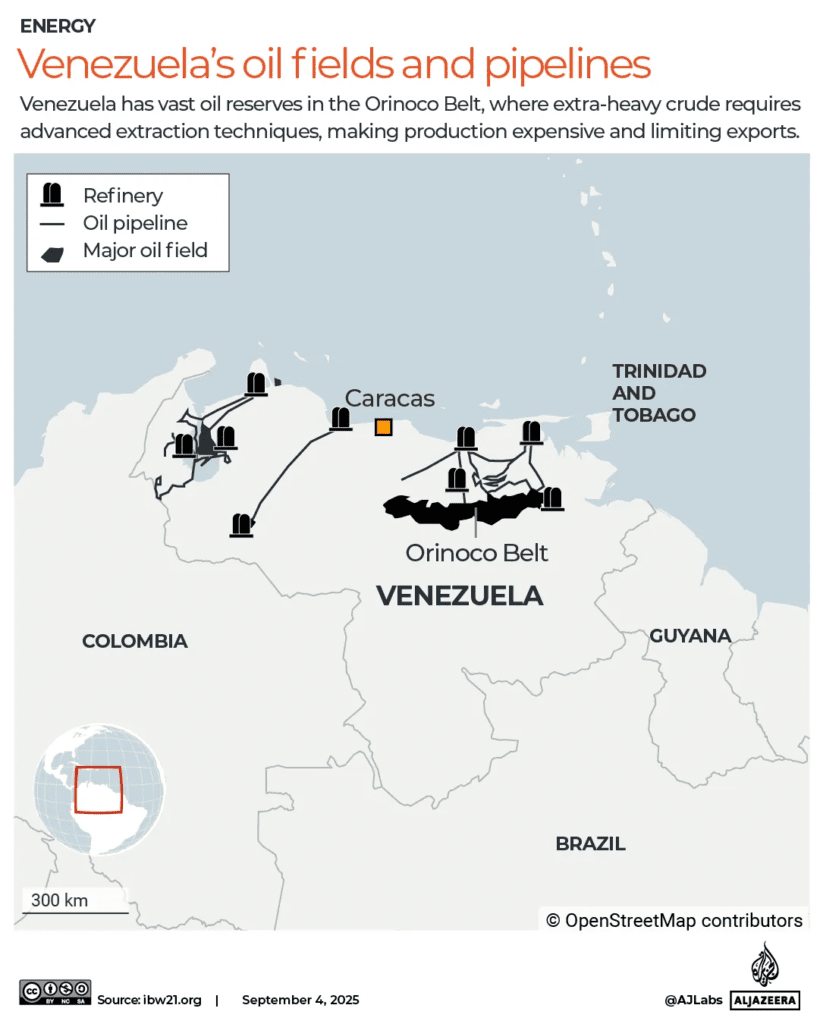
The process went further under Hugo Chávez after 1999. His government forced foreign companies to become minority partners or leave entirely. In 2007, remaining US oil assets were expropriated. Some companies received compensation through international arbitration, while others are still pursuing legal claims.
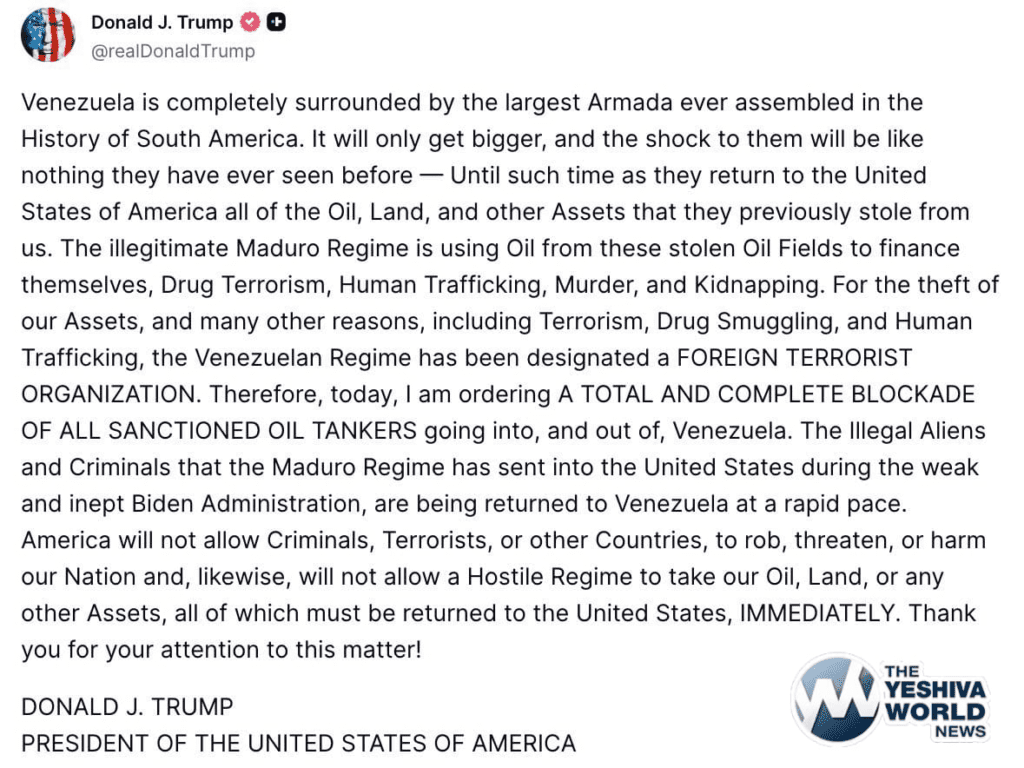
Trump and his aides, especially Stephen Miller, argue that this nationalisation amounted to the largest theft of American property in history. Their view is that US firms built the industry and therefore had a lasting claim. Trump has openly said the US wants its oil, land and assets back, language that goes far beyond standard sanctions policy.
However, international law does not support this claim. Under the UN principle of Permanent Sovereignty over Natural Resources, a country fully owns the resources within its borders. Legal experts agree that Venezuela’s oil belongs to Venezuela, even if foreign companies once operated there. Past disputes are about compensation, not ownership.
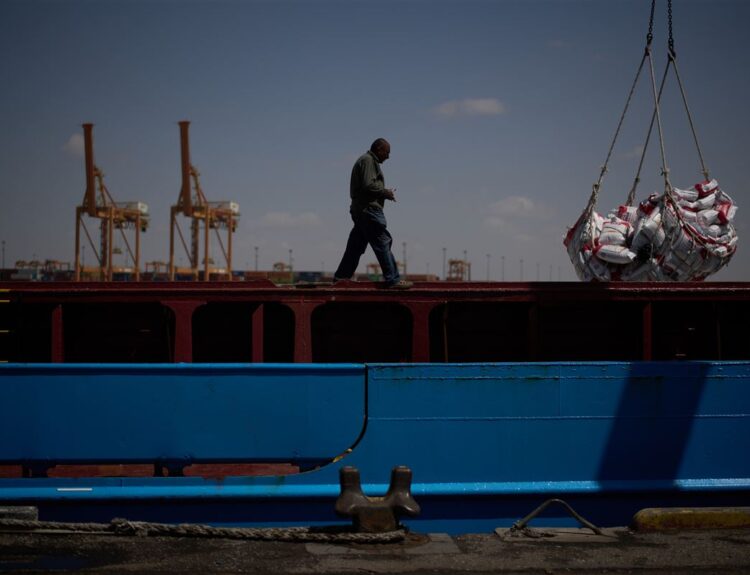
Trump’s recent blockade of sanctioned Venezuelan oil tankers and designation of Maduro’s government as a foreign terrorist organisation show that the oil issue is now tied to a broader regime-change strategy. Caracas says the US is using drugs and security as pretexts to regain control over energy assets.
Venezuela will continue to trade oil, Venezuelan President Nicolas Maduro said Wednesday, one day after President Donald Trump threatened to impose a blockade on all sanctioned oil tankers coming in and out of the country.
“Trade in and out will continue — our oil and all our natural wealth that by the constitution and Bolivar’s legacy belongs — our wealth, our land, and our oil — to its only legitimate owner, which for centuries and centuries has been our sovereign people of Venezuela, the absolute owner of the land, subsoil and all its wealth,” Maduro said, originally in Spanish.
Maduro said Trump’s “intention” is regime change in Venezuela. “This will just not happen, never, never, never — Venezuela will never be a colony of anything or anyone, never,” he said.
Maduro’s comments come after Trump announced Tuesday what he called a “blockade” of sanctioned oil tankers going into or out of Venezuela, ratcheting up American pressure on Maduro’s regime.

Venezuela, which holds the largest proven oil reserves in the world, continues to export mainly to China and other partners, while Chevron remains the only US company operating there under a special licence.
In short, Trump’s claim is political rather than legal. It reflects an argument based on past US investment and economic influence, but under international law these factors do not confer ownership or control over Venezuela’s oil resources.
Related: Russia Warns US Against ‘Fatal Mistake’ Over Venezuela
Disclosure: This article does not represent investment advice. The content and materials featured on this page are for educational purposes only.