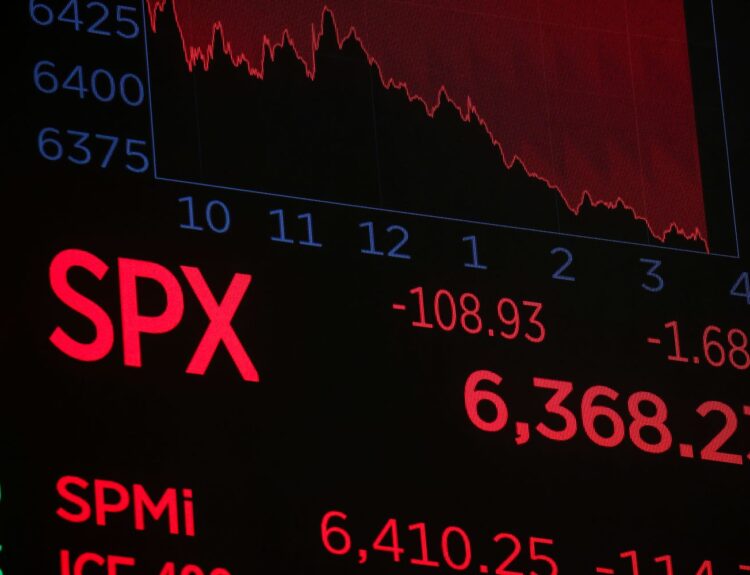

Major indexes ended lower, with the S&P 500 down about 0.3%, the Dow Jones Industrial Average off roughly 0.5%, and the Nasdaq Composite slipping about 0.3%. Tech weakness, led by declines in Nvidia and Apple, weighed on markets.
AI Fear Trade Hits Multiple Sectors
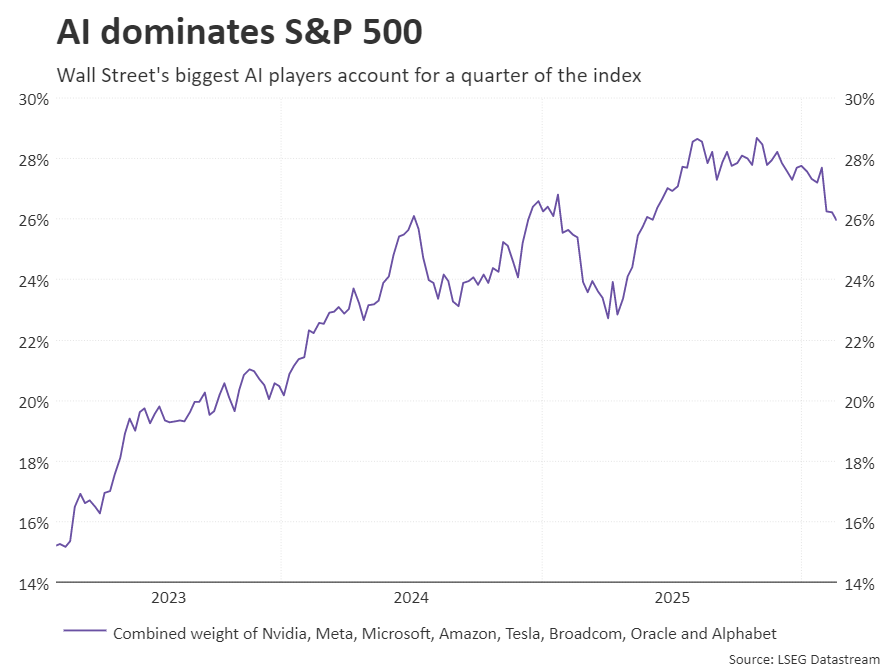
Recent market turbulence has been driven by worries that fast-advancing AI could shrink profit margins or disrupt entire industries, from software to logistics. Those fears triggered sharp drops in several stocks, including freight firms and software companies, after new AI platforms promised dramatic efficiency gains.
Private-market firms also slid after Blue Owl Capital said it would sell $1.4 billion in assets and limit withdrawals in one fund, raising concerns about credit risk and exposure to tech-linked loans.
Still, some analysts say the reaction looks excessive.
Wall Street Pushes Back
Executives and strategists argue AI will ultimately boost productivity rather than destroy business models.
Design software firm Figma jumped about 6% after reporting strong growth and rising adoption of its AI tools. CEO Dylan Field said, “As AI gets better, Figma gets better.” Weekly users of its AI product rose more than 70% quarter over quarter.
Wedbush analysts say cybersecurity stocks such as CrowdStrike and Zscaler, which have dropped sharply this year, could present buying opportunities because AI will increase demand for digital protection.
Research analysts at Bernstein added that coding makes up only a small portion of most engineers’ work, meaning AI is more likely to become a tool than a replacement.
Macro Forces Still in Play
Investors are also watching economic signals. Weekly jobless claims suggest the labor market is stabilizing, while markets are awaiting inflation data closely monitored by the Federal Reserve.
Interest-rate futures tracked by CME Group currently imply about a 50% chance the Fed could cut rates by June.
Geopolitics is another factor. Tensions between the US and Iran pushed oil prices higher after Donald Trump said a decision on possible military action could come within ten days.
Markets are nervous, not broken. AI fears, credit worries, and geopolitics are creating volatility, but many analysts believe the sell-off reflects uncertainty rather than a fundamental shift. Whether that proves true will depend on earnings, inflation data, and how quickly investors regain confidence.
Disclosure: This article does not represent investment advice. The content and materials featured on this page are for educational purposes only.
Related: What to make of this very weird market
Why risk-loving options traders are turning to prediction markets