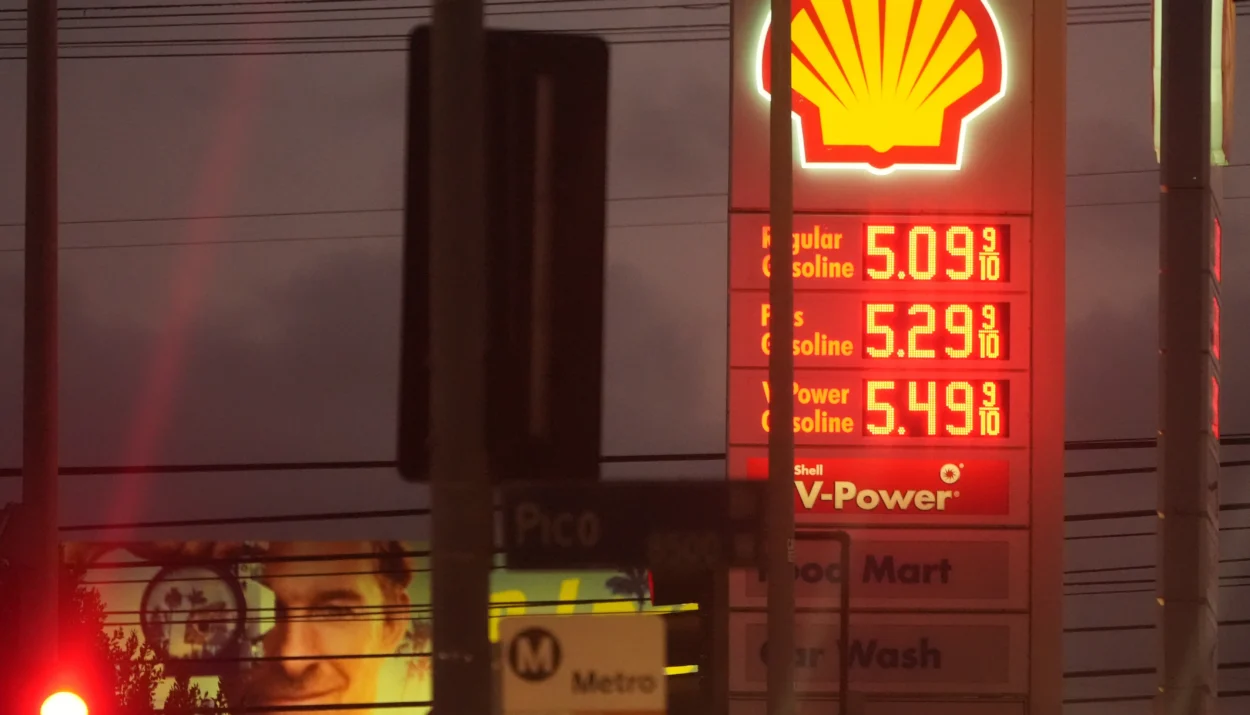

Gas prices across the United States are rising sharply after oil markets surged following US and Israeli strikes on Iran, adding new pressure to inflation and household budgets.
Since the conflict escalated on February 28, the average price of gasoline in the US has increased about 20%, according to recent market data.
The national average reached $3.58 per gallon on Wednesday, marking the 11th straight day of price increases.
The surge followed a sharp spike in oil prices, which briefly climbed above $100 per barrel earlier this week as markets feared disruptions to global energy supplies.
What It Means for Drivers
For many Americans, the increase is already being felt at the pump.
A typical sedan with a 12–16 gallon fuel tank would have cost about $36 to fill before the conflict, but now costs around $43 on average.
Larger vehicles such as SUVs, which often hold 16–21 gallons, face even higher fuel bills.
Gasoline prices vary significantly across the country due to taxes and regional factors.
- California: about $5.34 per gallon (highest in the US)
- Kansas: about $3.01 per gallon (lowest)

Why Gas Prices Are Still Rising
Even though oil prices have recently pulled back from their peak, drivers may continue to see higher fuel costs in the short term.
That’s because gasoline prices do not move instantly with crude oil, usually reacting several days after oil market changes.
As a result, the recent oil surge is still working its way through fuel markets.
Another Inflation Risk for the Economy
The rise in gasoline prices could also complicate the broader inflation outlook.
Gasoline is a major expense for households, meaning higher prices quickly ripple through consumer spending and transportation costs.
The latest Consumer Price Index (CPI) report will reflect inflation levels in February, before the sharp oil spike.
However, economists expect the surge in fuel prices to push inflation higher in the coming months if energy markets remain volatile.
For now, drivers across the US are feeling the impact of the geopolitical tensions at the pump.
Disclosure: This article does not represent investment advice. The content and materials featured on this page are for educational purposes only.