
US inflation remained steady in February, but rising energy prices linked to the Iran conflict are raising new concerns about whether inflation could accelerate again in the coming months.
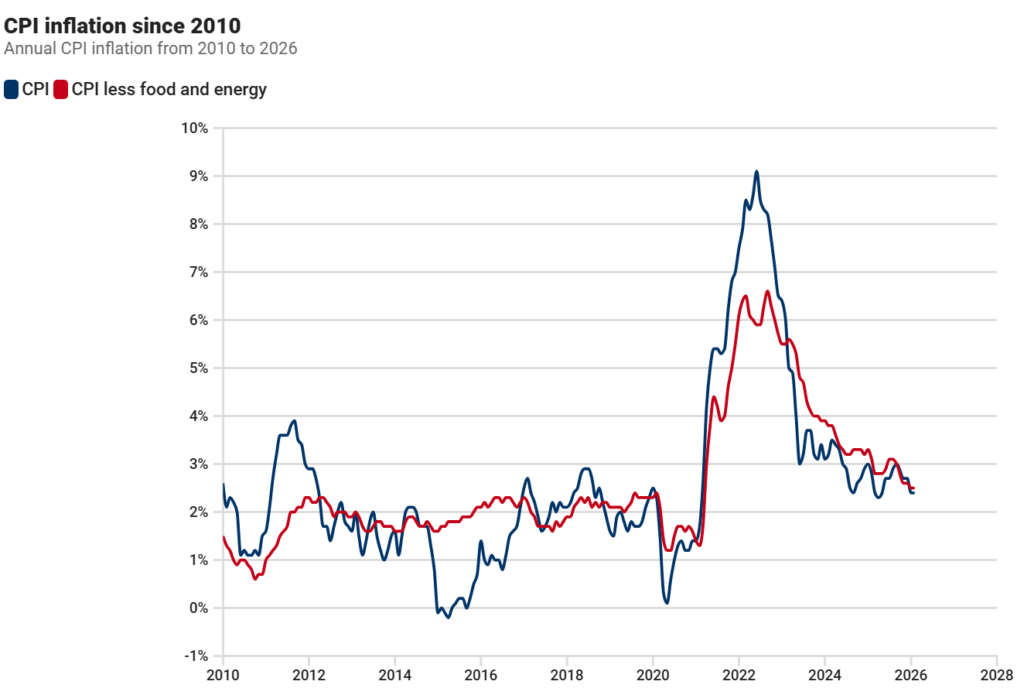
According to data released by the US Bureau of Labor Statistics, the Consumer Price Index (CPI) rose 0.3% in February from the previous month, while the annual inflation rate held at 2.4%, unchanged from January.
The figures matched economists’ expectations and remain above the Federal Reserve’s long-term target of 2%.
Core Inflation Shows Slight Cooling
Core inflation, which excludes volatile food and energy prices, increased 0.2% in February and 2.5% compared with a year earlier.
The monthly core reading was slightly lower than January’s 0.3% increase, suggesting some easing in underlying price pressures. However, economists warn that recent spikes in oil and gasoline prices could soon push inflation higher again.

Food, Housing and Services Continue to Rise
Several everyday costs continued to climb in February.
- Food prices: up 0.4% monthly, 3.1% annually
- Housing (shelter): up 0.2% monthly, 3% annually
- Medical care services: up 0.6% monthly, 4.1% annually
Some grocery categories saw particularly strong increases. Beef and veal prices jumped 1.5% in February and are up 14.4% from a year ago.
Meanwhile, fruit and vegetable prices rose 1.4% during the month.
Egg prices moved in the opposite direction, falling 3.8% in February and dropping 42.1% compared with last year following improvements in supply after earlier shortages.
Energy Prices Begin to Climb Again
Energy costs were also rising before the latest geopolitical tensions intensified.
- Gasoline prices: up 0.8% in February
- Utility gas services: up 3.1% for the month
- Electricity prices: down 0.7% monthly, but still 4.8% higher than last year
Since the escalation of the Iran conflict, gasoline prices in the US have already moved above $3.50 per gallon, which economists say could push inflation higher in upcoming reports.
Heather Long, chief economist at Navy Federal Credit Union, said the February inflation reading may not last.
“February’s inflation rate of 2.4% is one of the lowest in the past five years, but it won’t stay that way with gas prices surging,” she said.
Fed Likely to Hold Rates Steady
The inflation data comes just days before the Federal Reserve’s next policy meeting on March 17–18. Markets now overwhelmingly expect the Fed to keep interest rates unchanged, with the benchmark rate likely to remain in the 3.5% to 3.75% range.
According to the CME FedWatch tool, the probability that the Fed will hold rates steady has climbed to about 99%.

However, economists say uncertainty around energy prices and the Middle East conflict could keep policymakers cautious about cutting rates.
“Continued uncertainty around oil prices means the Fed will likely remain cautious about lowering rates,” said Ellen Zentner, chief economic strategist at Morgan Stanley Wealth Management.
For now, February’s data suggests inflation was stabilizing before the latest geopolitical shocks.
But the impact of higher oil and gasoline prices may not fully appear in inflation reports until the coming months, leaving policymakers and markets watching energy prices closely.
Disclosure: This article does not represent investment advice. The content and materials featured on this page are for educational purposes only.