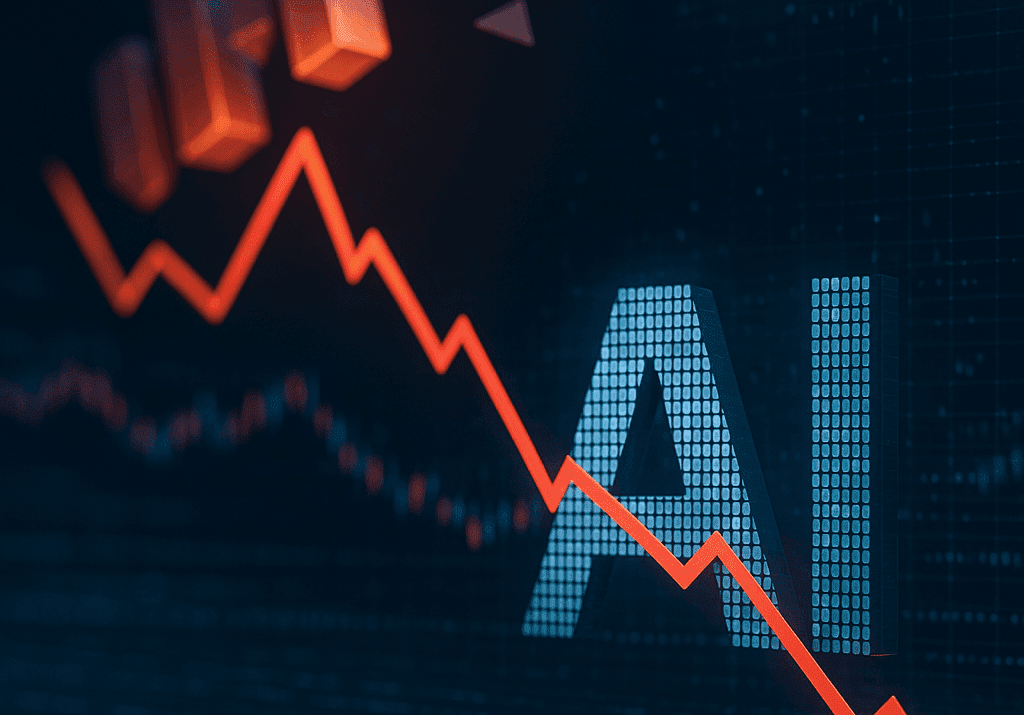

Wall Street’s long-running scepticism toward software stocks has turned into outright panic. Traders are dumping software-as-a-service names as artificial intelligence raises fears of shrinking moats, pricing pressure, and faster disruption across the industry.
“This is ‘get me out’ selling,” said a Jefferies trader, describing what some desks are calling a SaaSpocalypse.
What set it off
The latest wave of selling accelerated after Anthropic released an AI productivity tool for in-house lawyers. That announcement hit legal and data-driven software firms hard:
- Thomson Reuters fell about 16%
- London Stock Exchange Group dropped roughly 13%
- CS Disco slid 12%
- LegalZoom sank nearly 20%
The S&P North American software index is now down about 15% in January, its worst monthly drop since 2008.
Why investors are worried
The core fear is simple. AI lowers barriers to entry and compresses pricing. That makes many software products easier to replace.
“The range of outcomes has widened,” said a strategist at LPL Financial. “That makes it harder to value these businesses or know what is actually cheap.”
Even solid earnings have not helped. Microsoft reported strong results, but slowing cloud growth and heavy AI spending knocked the stock sharply lower. January was Microsoft’s worst month in more than a decade.
Private equity is reacting too. Firms including Apollo Global Management have cut software exposure and hired consultants to assess which portfolio companies are most vulnerable to AI disruption.
Not everyone is selling
There are early signs of bottom-fishing. Palantir posted strong revenue growth and a bullish outlook, sending shares higher. Some funds are selectively buying Microsoft, arguing its scale and balance sheet position it as a long-term AI winner.
From a technical view, several strategists say the sector looks oversold and due for a bounce. Valuations are near multi-year lows.
The big question
The selloff is no longer about near-term earnings. It is about survival.
Investors now face a tougher task: separating software companies that will be replaced by AI from those that will use AI to deepen their advantage. Until that picture clears, traders say fear, not fundamentals, is likely to keep driving prices.
Disclosure: This article does not represent investment advice. The content and materials featured on this page are for educational purposes only.
Related: There’s now a bigger risk for stocks than the economy or corporate earnings