Global markets are shifting from panic to patience after the dramatic oil-price swings earlier this week, with investors now waiting for clearer signs about the duration of the Iran conflict and its impact on global energy supplies.
Oil markets remain the main focus.
Crude prices surged close to $120 per barrel earlier this week, triggering fears of a major global supply shock as tensions escalated around the Strait of Hormuz, one of the world’s most important oil shipping routes.
Prices later fell below $90 per barrel after reports that the International Energy Agency (IEA) was considering the largest coordinated release of oil reserves in history, potentially more than double the 182 million barrels released after Russia invades Ukraine in 2022.
However, oil rebounded again as traders assessed the limits of such a move.
Analysts at Goldman Sachs estimate that a reserve release similar to the 2022 operation would only offset about 12 days of supply disruption, assuming a loss of roughly 15.4 million barrels per day of Gulf exports.
War Concerns Continue to Shape Markets
Despite some optimism in markets, the situation on the ground remains tense.
Heavy bombardments continued in the Middle East on Tuesday, shipping remains largely blocked in the Strait of Hormuz, and Saudi Aramco’s CEO warned the conflict could have “catastrophic consequences” for the global oil market if disruptions persist.
These risks have kept investors cautious even as oil prices cooled from their peak.

Global Stocks Steady While Wall Street Stalls
Equity markets showed mixed performance.
Asian stocks advanced, with Japan’s Nikkei rising 1.7% and South Korea’s KOSPI gaining 1.75%.
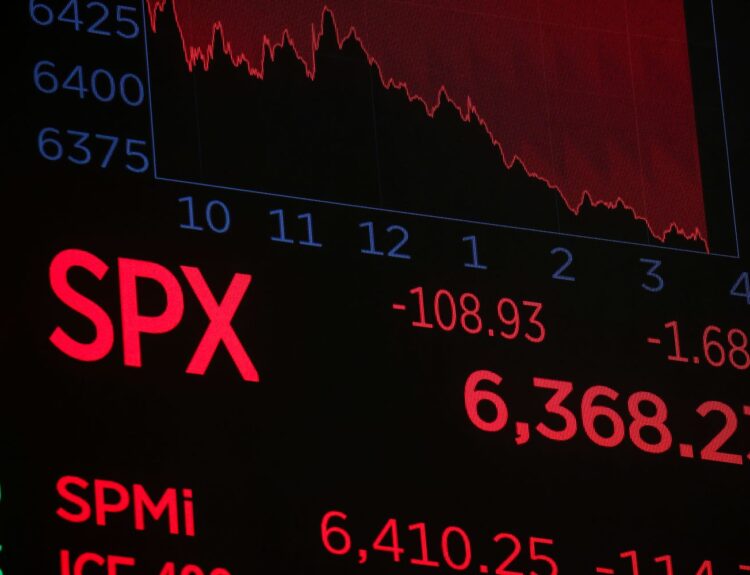
However, European stocks opened slightly lower, and U.S. markets ended Tuesday mostly flat as investors weighed the geopolitical risks.
The U.S. dollar rebounded modestly after earlier declines as traders continued to monitor developments in the Middle East.
Inflation Data Now in Focus
Markets are also watching key economic data that could shape monetary policy expectations.
Investors will get the latest U.S. Consumer Price Index (CPI) data for February, offering a snapshot of inflation levels just before the Iran conflict intensified.
More important may be the upcoming Personal Consumption Expenditures (PCE) data, the Federal Reserve’s preferred inflation gauge, which analysts say was already running above 3% even before the oil spike.
Higher energy prices could push inflation even further in the coming months.
AI Momentum and Credit Risks Emerge
Outside the energy crisis, technology stocks continue to attract investor attention.
Oracle shares jumped about 8% after the company raised long-term revenue forecasts, citing strong demand for AI infrastructure and data centers.
At the same time, concerns are emerging in financial markets about private credit funds, with JPMorgan reportedly marking down some loan values and tightening lending to the sector, according to the Financial Times.
For now, markets appear to be settling after the early-week turmoil.
But investors remain cautious, knowing that oil prices, inflation, and global markets could move sharply again depending on how the Iran conflict unfolds.
Related: Trading Day: Role reversal, as Wall Street lags
Disclosure: This article does not represent investment advice. The content and materials featured on this page are for educational purposes only.