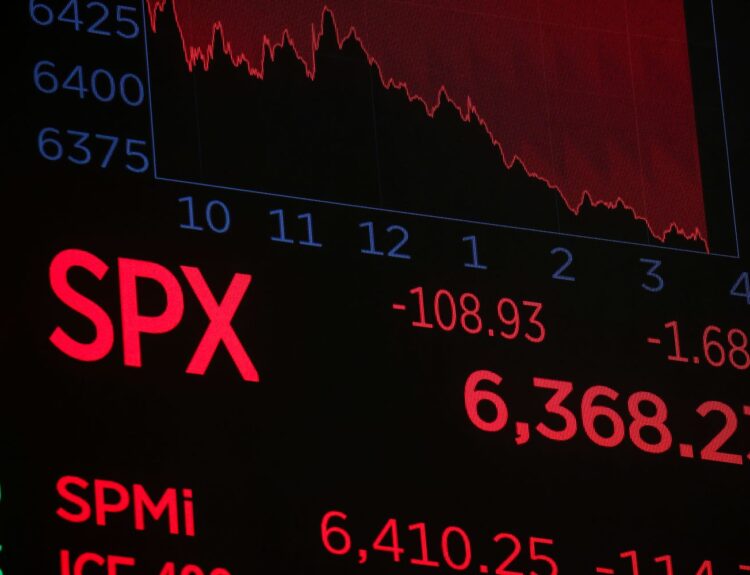



Money is quietly leaving Wall Street at the fastest pace in years as investors hunt for better opportunities overseas.
US investors have withdrawn about $75 billion from domestic equity funds in the past six months, including $52 billion since the start of 2026, the biggest early-year outflow in at least a decade, according to LSEG/Lipper data. The shift signals that the long-dominant “buy America” trade may be losing momentum.
Why Investors Are Moving Money Abroad
For years, US stocks led global markets thanks to strong growth, rising corporate earnings, and tech dominance. The rally accelerated during the AI boom, which pushed the S&P 500 to record highs.
Now, several factors are changing the mood:
- Big Tech gains are fading, making investors more selective.
- Valuations are much higher in the US than overseas markets.
- Concerns about AI costs and risks are rising.
- A weaker dollar has shifted global return dynamics.
Investors are increasingly rotating toward emerging markets, Europe, and Japan, where stocks are cheaper and growth prospects look stronger.
The Performance Gap Is Hard to Ignore
Over the past year, global markets have outperformed US stocks in dollar terms:
- Japan’s Nikkei 225 up about 43%
- Europe’s STOXX Europe 600 up about 26%
- China’s CSI 300 up about 23%
- South Korea’s KOSPI roughly doubled
By comparison, the S&P 500 gained about 14%.
Valuations also favor foreign markets. The S&P trades near 21.8× forward earnings, versus about 15× in Europe, 17× in Japan, and 13.5× in China.
Rotation Away From Tech
Strategists say investors are shifting from high-growth tech names into value and cyclical sectors such as banks and industrial companies, many of which are heavily represented in overseas markets.
European banking stocks, for example, surged 67% last year and are already up another 4% in 2026.
A Global Shift Underway
Fund-manager surveys from Bank of America show investors moving from US equities into emerging markets at the fastest pace in five years. Data also indicates US money flowing into European equity funds has accelerated since mid-2025.
Some strategists believe this could mark the start of a long-term global rotation rather than a short-term trade.
Wall Street is not collapsing, but it is losing its monopoly on investor attention. After more than a decade of dominance, US stocks are facing real competition from overseas markets, and investors are beginning to follow the returns
Disclosure: This article does not represent investment advice. The content and materials featured on this page are for educational purposes only.
Related: What to make of this very weird market
Why risk-loving options traders are turning to prediction markets
US Stocks are losing the global race. Should Investors Be Worried?