The Federal Reserve cut interest rates by 0.25 percentage point on Wednesday, taking the federal funds range to 3.5% to 3.75%. It was the third cut in a row and a very split decision, but the real story of the day came from Jerome Powell’s press conference, not from the rate move itself.
Below is a simple breakdown of what happened, what Powell actually said and what it means for markets and the economy.
1. Quick recap of the decision
- The Fed cut rates by 25 bps, as markets expected.
- The vote was 9 to 3. Stephen Miran wanted a bigger 50 bp cut, while Austan Goolsbee and Jeffrey Schmid wanted no cut.
- The new projections still show only one cut in 2026 and one in 2027, with no cuts penciled in for 2028. In other words, the official path for rates is very shallow from here.
- The Fed also said it will start buying 40 billion dollars of Treasury bills over the next 30 days, after stopping balance sheet runoff.
So the cut itself was small and expected, but the message around it was careful and slightly hawkish.
More about: Fed Set to Cut Rates for Third Time in 2025: What to expect
2. Is the Fed “printing money again”?
What is really happening: The Fed is going to buy short term Treasury bills to keep the financial system supplied with enough reserves. That technically expands the Fed balance sheet, so in a mechanical sense it looks like “printing money”.
But this is not a huge QE stimulus program like during Covid. It is more of a liquidity refill, because reserves had fallen quite a lot while they were shrinking the balance sheet.
So yes, the Fed is adding money back into the system, but for now the size and pace are limited. It helps funding markets and risk assets, but it is not an all in money flood yet.
3. What Powell said
Powell’s message was basically:
- We are close to neutral: He said rates are now “within the range of plausible neutral”, meaning policy is no longer clearly restrictive or clearly stimulative. That is why he also said the Fed is now “well positioned to wait and see” before doing more.
- Next move is uncertain, January is open: Powell repeated that the Fed has not decided anything about January. Some officials think the Fed should stop and watch the data, others still want more cuts. So the base case now is something like “hold or cut a bit more, but no hikes”.
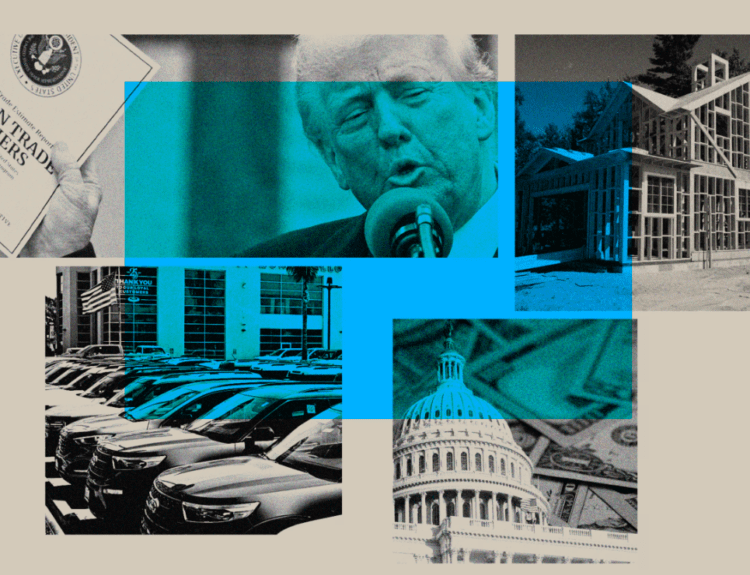
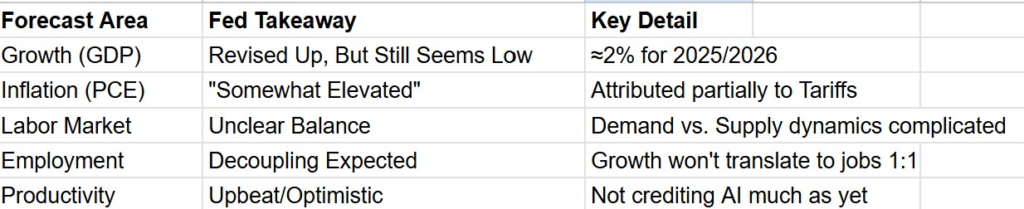
- Tariffs are driving the inflation overshoot: He was very direct here. Powell said it is “really tariffs that are causing most of the inflation overshoot” and that if you strip tariffs out, inflation would be in the low twos already.
His base case is that tariffs create a one time jump in prices, not a permanent inflation spiral, as long as the Fed does not let that shock turn into a wage price loop. - Labor market is cooling, not collapsing: Powell said the economy “does not feel like a hot economy”.
He noted:- Official payroll data are probably overstating job growth, and the Fed’s internal view is closer to minus twenty thousand jobs per month.
- Job finding is weaker, layoffs are starting to rise in some areas, and immigration has dropped.
Because of that, the Fed has shifted its risk focus more toward employment, not only inflation.
- AI is visible but still small in the jobs story: He admitted companies are talking about AI when they cut staff or freeze hiring, but he said AI is “not a big part of the story yet” for the labor market. The bigger issues are tariffs, slower demand and lower labor supply.
- Housing is a problem the Fed cannot fix: Powell was very clear that a 25 bp cut will not solve housing affordability. The real problem is low supply and locked in cheap pandemic mortgages, not only high rates. The Fed can move borrowing costs a bit, but cannot build new homes.
- No risk-free option for policy: His key line was: “There is no risk-free path for policy.”
The Fed must choose between:- cutting too little and risking a weak labor market, or
- cutting too much and letting inflation re accelerate.
Right now he thinks downside risks to jobs have risen, so the balance has moved slightly toward protecting employment, while still promising to get inflation back to 2 percent.
4. What does this all mean for markets
Short term
- The combination of another cut, no talk of hikes, and Treasury bill purchases is supportive for risk assets.
- That is why stocks pushed to, or close to, new highs and bond yields slipped after the decision.
- Markets still believe the Fed will deliver more easing than the dot plot suggests in 2026. Fed swaps are pricing around 50 bps of cuts next year, not just one.
Medium to long term
If Powell is right and tariffs are a one time inflation shock, the path he described is very bullish for asset prices:
- productivity speeding up, helped partly by AI
- growth around 2 percent or a bit more
- inflation drifting back toward 2 percent
- rates slowly moving lower over the next few years
The risk is political and policy-driven: If tariffs keep rising, or stay in place longer than expected, the Fed may have to stay tighter than markets hope. A new Fed chair chosen by Trump who pushes for rapid cuts could fuel another asset boom, but if inflation heats up again, a later tightening cycle could be painful.
More about: Trump Says Next Fed Chair Must Cut Rates Immediately
Today’s decision: another small cut, a divided committee, and a clear hint that the Fed may pause for a while. Powell’s message:
- tariffs are the main source of higher inflation right now
- the labor market is quietly weakening
- the Fed has moved its balance of risks a bit toward protecting jobs
- but it still promises to “deliver 2 percent inflation.”
- For markets: liquidity support and a patient Fed are positive for stocks and other risk assets, as long as tariffs do not force a new inflation fight later.
So in simple terms, the Fed is easing, but carefully. Powell is trying to walk a very thin line between helping a softer labor market and not restarting an inflation problem that would hurt the economy and investors later on.
Disclosure: This article does not represent investment advice. The content and materials featured on this page are for educational purposes only.