
Starting your investment journey can feel overwhelming when every choice seems to carry its own set of questions and risks. For urban investors eager to grow wealth, understanding your unique goals and how much risk you can handle sets the foundation for smart ETF investing. By learning how to assess your financial objectives and risk comfort, you gain the power to build a strategy that fits your real life. Risk tolerance shapes every step of the investment process.
Table of Contents
- Step 1: Assess Your Financial Goals And Risk Tolerance
- Step 2: Select The Right Brokerage Account For ETFs
- Step 3: Research And Compare Potential ETF Options
- Step 4: Build Your ETF Portfolio With Deliberate Choices
- Step 5: Monitor And Rebalance Your Investments Regularly
Quick Summary
| Key Insight | Explanation |
|---|---|
| 1. Assess financial goals and risks | Understand your financial situation and set clear goals while assessing your comfort with investment risk. |
| 2. Choose the right brokerage account | Select a brokerage that offers favorable trading fees, user experience, and adequate resources for ETF investments. |
| 3. Research ETF options thoroughly | Analyze expense ratios, historical performance, and sector allocation to ensure ETFs match your investment goals. |
| 4. Build a diversified ETF portfolio | Allocate funds strategically across various sectors to balance risk and growth potential in your investment mix. |
| 5. Monitor and rebalance regularly | Keep track of your investments and adjust as needed to maintain your desired asset allocation and investment objectives. |
Step 1: Assess your financial goals and risk tolerance
Building wealth through ETF investing starts with understanding your personal financial landscape. This critical step involves mapping out where you want to go financially and how much risk you’re comfortable taking along the way.
To effectively assess your financial goals and risk tolerance, you’ll need to consider several key factors. Understanding financial risk tolerance involves examining both your financial capacity and psychological comfort with potential investment fluctuations. Here are the primary elements to evaluate:
- Current financial situation: Calculate your income, expenses, savings, and existing investments
- Time horizon: Determine how long you plan to invest before needing the funds
- Financial objectives: Identify specific goals like retirement, home purchase, or wealth accumulation
- Personal risk comfort level: Assess how you emotionally handle potential investment losses
Start by creating a detailed financial snapshot. Track your monthly income and expenses, understanding exactly how much you can realistically invest. Consider your age, job stability, and future earning potential. Younger investors might tolerate more risk, while those closer to retirement typically prefer more conservative strategies.
Your risk tolerance is not static – it evolves with your life circumstances and financial maturity.
A practical approach involves categorizing your risk profile: conservative, moderate, or aggressive. Conservative investors prioritize capital preservation, moderate investors seek balanced growth, and aggressive investors are comfortable with higher volatility for potential larger returns.

Here’s a quick reference comparing common ETF investor risk profiles:
| Risk Profile | Expected Returns | Volatility Tolerance | Typical Investment Horizon |
|---|---|---|---|
| Conservative | Lower, steady gains | Uncomfortable with large losses | Short to medium term |
| Moderate | Balanced risk and reward | Handles moderate fluctuations | Medium to long term |
| Aggressive | Seeks higher returns | Comfortable with high volatility | Long term focus |
Pro tip: Take an online risk tolerance assessment or consult a financial advisor to gain objective insights into your personal investment profile.
Step 2: Select the right brokerage account for ETFs
Choosing the right brokerage account is a crucial step in your ETF investment journey. This decision will impact your trading costs, investment options, and overall investment experience.
Understanding brokerage account options requires careful consideration of several key factors. Different brokerage platforms offer unique features that can significantly influence your investment strategy. Here are the primary elements to evaluate:
- Trading fees: Compare commission rates for ETF purchases and sales
- Account minimums: Check initial deposit requirements
- ETF selection: Assess the range of available ETF options
- Platform usability: Evaluate user interface and research tools
- Customer support: Review quality of investor assistance
Consider your specific investment needs when selecting a brokerage. Some platforms offer commission-free ETF trading, while others provide extensive research resources. Younger, more tech-savvy investors might prefer online platforms with robust mobile apps, whereas more experienced investors might prioritize comprehensive research tools.
Not all brokerage accounts are created equal – your choice can make a significant difference in your investment performance.
Pay attention to additional features like educational resources, trading platforms, and investment guidance. Some brokerages offer fractional ETF shares, which can be beneficial for investors with limited capital. Others provide advanced trading tools or integrated financial planning services.
Pro tip: Open a practice account or use free trial platforms to test different brokerage interfaces before committing your actual investment funds.
Step 3: Research and compare potential ETF options
Researching and comparing ETF options is a critical step in building a smart investment portfolio. This process will help you identify ETFs that align with your financial goals and risk tolerance.
Comprehensive ETF market research involves examining multiple factors to make informed investment decisions. Understanding the nuanced differences between various ETF types can significantly impact your investment strategy. Here are key elements to evaluate:
- Expense ratios: Compare management fees across different ETFs
- Performance history: Analyze historical returns and market performance
- Underlying index: Understand the benchmark tracking methodology
- Sector and asset allocation: Ensure alignment with your investment goals
- Trading volume: Check liquidity and ease of buying/selling
Begin by identifying your investment objectives. Are you seeking broad market exposure, sector-specific investments, or targeted asset classes? Different ETFs serve different strategic purposes. Some track entire market indexes, while others focus on specific industries, regions, or investment styles like growth or value.
Not all ETFs are created equal – deep research separates successful investors from casual traders.
Utilize multiple research tools and platforms to gather comprehensive information. Many online brokerages offer detailed ETF screening tools that allow you to filter options based on performance, fees, and other critical metrics. Pay attention to the fund’s prospectus, which provides in-depth information about the ETF’s strategy, holdings, and potential risks.
Pro tip: Use multiple research sources and compare ETF options across different platforms to ensure a well-rounded investment approach.
Step 4: Build your ETF portfolio with deliberate choices
Building a strategic ETF portfolio requires careful planning and intentional investment decisions. This step transforms your research into a concrete investment strategy that aligns with your financial goals.
Strategic portfolio management techniques involve thoughtful asset allocation and diversification. Your goal is to create a balanced portfolio that minimizes risk while maximizing potential returns. Here are key principles to guide your investment choices:
- Asset allocation: Distribute investments across different market sectors
- Diversification: Spread investments to reduce overall portfolio risk
- Core and satellite approach: Combine broad market ETFs with targeted investments
- Rebalancing strategy: Periodically adjust your portfolio to maintain desired allocation
- Cost management: Prioritize low-expense ETFs to maximize long-term returns
Start by establishing your core portfolio with broad market index ETFs that provide stable, consistent performance. These foundational investments typically represent 60-70% of your portfolio. Then, add satellite investments in specific sectors or themes that offer growth potential or align with your investment thesis.
A well-constructed ETF portfolio is like a finely tuned engine – each component plays a critical role in overall performance.
Consider your risk tolerance and investment timeline when selecting ETFs. Younger investors might lean towards more aggressive growth-oriented ETFs, while those closer to retirement may prefer more conservative, income-generating options. Pay attention to correlation between your ETF selections to ensure true diversification.
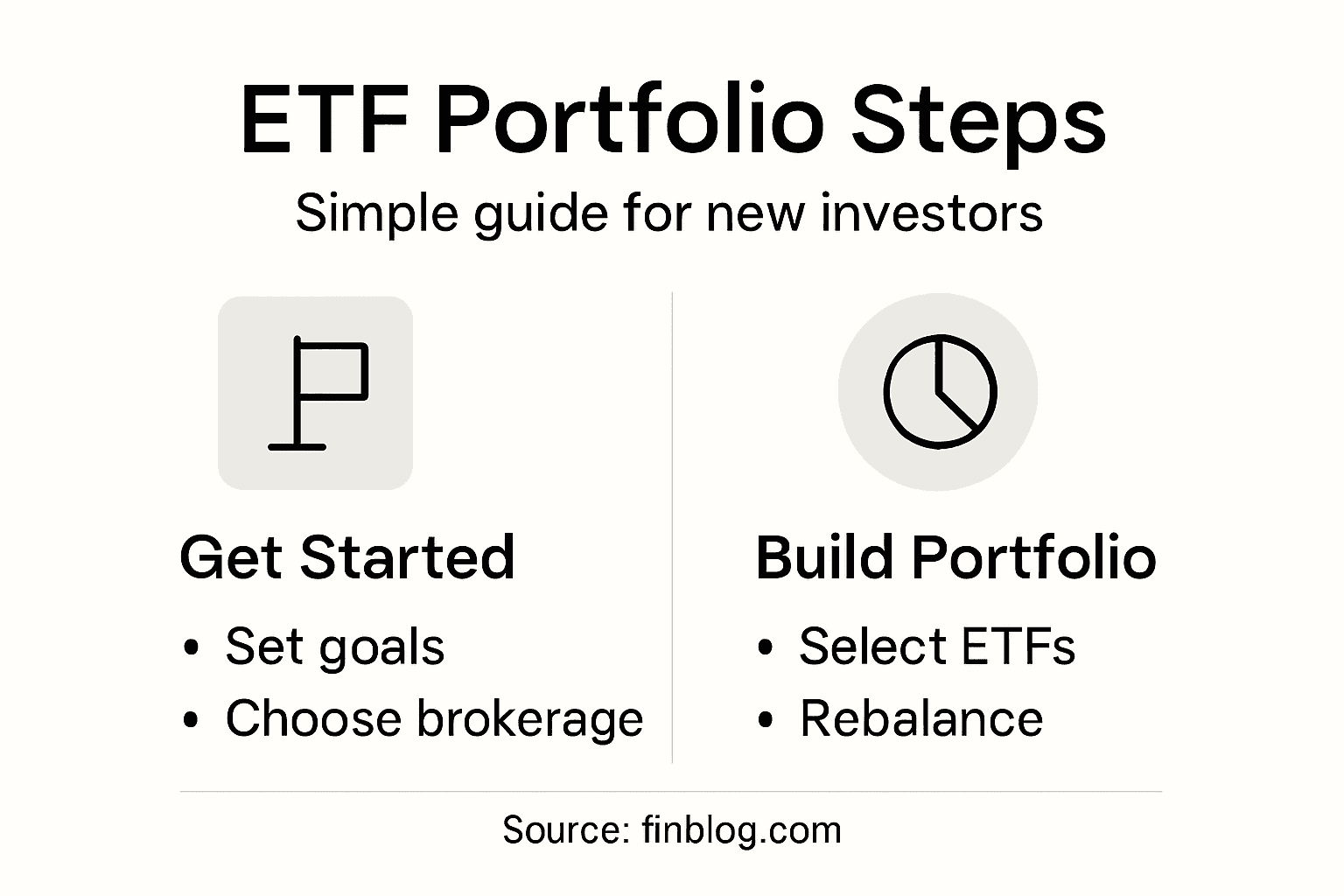
Below is a summary of common ETF portfolio building strategies:
| Strategy Type | Core Focus | Satellite Focus | Typical Outcome |
|---|---|---|---|
| Core-Satellite | Broad market index ETFs | Sector or thematic ETFs | Diversified with growth potential |
| Income-Oriented | Bond and dividend ETFs | REITs or preferred stock ETFs | Steady income stream |
| Growth-Focused | Large-cap equities | Small-cap or international ETFs | Aggressive capital appreciation |
Pro tip: Create a spreadsheet to track your ETF holdings, performance, and allocation percentages to maintain a disciplined investment approach.
Step 5: Monitor and rebalance your investments regularly
Successful ETF investing goes beyond initial selection – it requires ongoing attention and strategic adjustments. Regular monitoring helps you stay aligned with your financial goals and market conditions.
ETF rebalancing strategies play a critical role in maintaining your portfolio’s performance and risk profile. Monitoring involves tracking your investments’ performance and making calculated adjustments. Here are key steps to effective portfolio management:
- Performance tracking: Review ETF performance quarterly
- Asset allocation drift: Check if your portfolio remains balanced
- Market condition assessment: Evaluate economic and market trends
- Tax efficiency: Consider potential tax implications of rebalancing
- Transaction cost management: Minimize unnecessary trading expenses
Establish a consistent rebalancing schedule – typically once or twice a year. This helps prevent your portfolio from becoming too heavily weighted in any single sector or asset class. For example, if your initial allocation was 60% stocks and 40% bonds, market movements might shift this to 70% stocks and 30% bonds.
Consistent monitoring transforms passive investing into active wealth management.
When rebalancing, you’ll need to buy or sell portions of your ETFs to return to your original target allocation. This disciplined approach helps manage risk and potentially improve long-term returns by systematically selling high and buying low.
Pro tip: Set calendar reminders for your rebalancing dates and use percentage thresholds (like 5%) to trigger portfolio adjustments.
Take Control of Your ETF Investing Journey Today
Starting your ETF investing journey can feel overwhelming when trying to assess your risk tolerance, select the right brokerage, and build a well-balanced portfolio. You want to avoid costly mistakes and ensure your investments align with your financial goals and comfort with market fluctuations. This article breaks down essential steps like risk assessment, portfolio diversification, and proactive rebalancing—all key concepts that can help you build lasting wealth safely.
Now is the perfect time to move from understanding theory to taking confident action. Visit finblog.com to access expert financial consulting and practical guidance tailored to your unique situation. Learn how to optimize your investment choices, discover commission-free brokerage options, and create a disciplined rebalancing plan with tools designed just for beginner investors like you. Don’t wait to start building a portfolio that works for your future. Take the first step by exploring financial advice and consulting at finblog.com and empower your ETF investment strategy with proven support today.
Frequently Asked Questions
What should I consider when assessing my financial goals for ETF investing?
To effectively assess your financial goals for ETF investing, start by calculating your current income, expenses, and savings. Create a detailed financial snapshot to determine your investment capacity and set specific objectives like retirement or wealth accumulation.
How do I choose the right brokerage account for trading ETFs?
Selecting the right brokerage account involves comparing trading fees, account minimums, and available ETF options. Evaluate platforms for user-friendliness and customer support so that you can make informed decisions that align with your investing needs.
What factors should I research when comparing ETF options?
When comparing ETF options, focus on expense ratios, performance history, and underlying index methodologies. Analyze the sector and asset allocation of the ETFs to ensure they align with your financial goals and risk tolerance.
How can I build a diversified ETF portfolio?
To build a diversified ETF portfolio, allocate investments across different sectors and combine core market ETFs with satellite investments in specific themes. Aim to establish a balanced mix that reflects your risk tolerance and investment timeline, adjusting as needed.
When should I monitor and rebalance my ETF investments?
You should monitor your ETF investments at least quarterly and consider rebalancing your portfolio once or twice a year. This ensures your investments remain aligned with your original asset allocation, helping to manage risk and enhance potential returns.
How can I assess my risk tolerance for ETF investment?
Assessing your risk tolerance involves evaluating your current financial situation, time horizon, and personal comfort with potential losses. Take an online risk tolerance assessment or discuss your investing style with a financial advisor to gain a clearer understanding.
Recommended
- Master Building an Investment Portfolio for Profits – Finblog
- How to Build Wealth: Proven Steps for Lasting Financial Success – Finblog
- Evaluating Investment Opportunities for Confident Decisions – Finblog
- Why Invest Early: Everything You Need to Know – Finblog
- ETFs: Wo die Anleger investieren – Smolio