
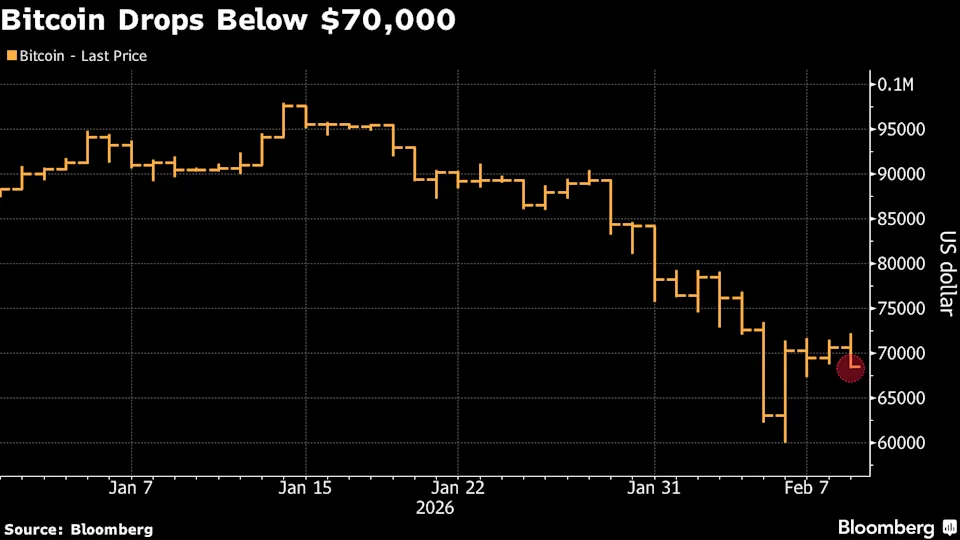
Bitcoin slipped back below $70,000 on Monday, extending a period of extreme volatility that has shaken investor confidence, even as some analysts argue the long-term bull case remains firmly intact.
The world’s largest cryptocurrency fell about 2% to around $69,000 in New York trading, after a turbulent week that saw prices plunge to nearly $60,000, the lowest level since October 2024, before rebounding sharply. Volatility spiked to levels last seen during the 2022 FTX collapse, underscoring how fragile sentiment remains.
Despite the selloff, analysts at Bernstein described the current downturn as the “weakest bitcoin bear case in history,” reiterating a $150,000 price target by the end of 2026. In a note to clients, the firm argued the pullback reflects a crisis of confidence rather than structural damage, pointing to continued institutional adoption, spot bitcoin ETFs, corporate treasury participation, and improving market infrastructure.
Bernstein said none of the hallmarks of past crypto crashes have emerged, such as hidden leverage, major insolvencies, or systemic failures. Instead, they framed the decline as a liquidity-driven correction, with bitcoin still behaving more like a risk asset than a mature safe haven.
Not all analysts are convinced the worst is over. On-chain data shows large holders, or “whales,” reducing exposure, while smaller retail investors continue to buy the dip, a pattern historically associated with prolonged bear markets. Santiment data indicates wallets holding between 10 and 10,000 bitcoin have cut holdings by more than 80,000 BTC, while small wallets continue to accumulate.
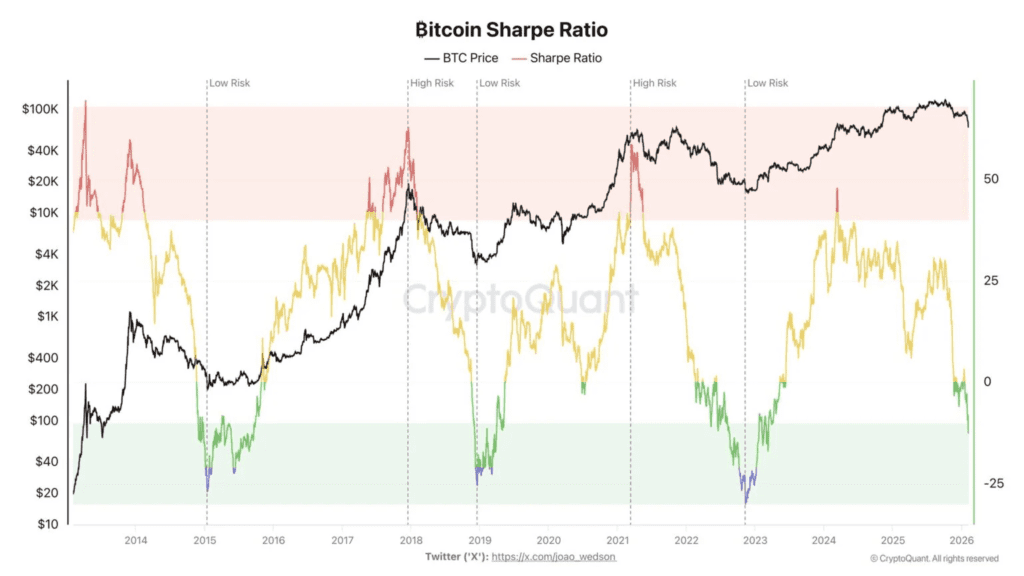
Technical analysts also remain cautious. Bitcoin has broken multiple key support levels since its October peak near $126,000, and some chart watchers warn the market could stay in a bearish phase until prices reclaim the $75,000 zone. Others point to the 200-week moving average as a potential magnet if the downturn deepens.
Still, there are tentative signs of stabilization. US spot bitcoin ETFs recorded net inflows of more than $200 million late last week, suggesting some investors are willing to step in on weakness. Market participants say the next decisive move is likely to come if bitcoin breaks sustainably below $62,000 or rallies convincingly above $76,000.
For now, bitcoin remains caught between long-term optimism and short-term fear, with traders bracing for continued swings as liquidity conditions and risk appetite evolve.
Disclosure: This article does not represent investment advice. The content and materials featured on this page are for educational purposes only.
Related: Bitcoin’s 50% Drop Shakes Prices, Not Belief