
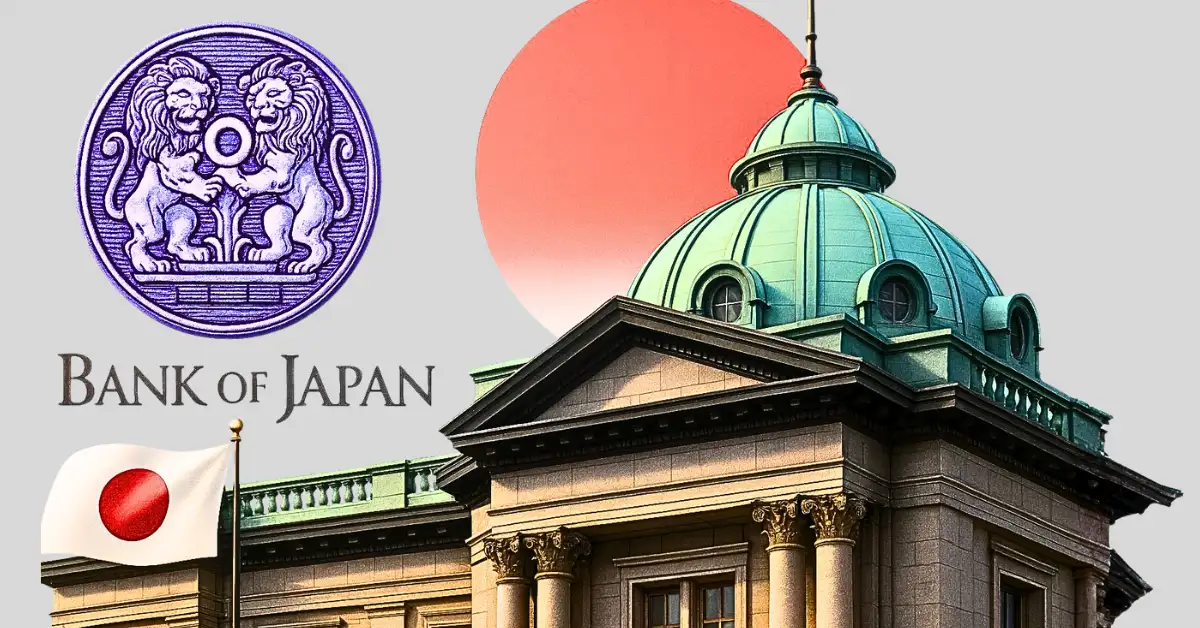

The Bank of Japan (BOJ) is preparing to start selling its massive $534 billion exchange-traded fund (ETF) portfolio as early as January 2026, marking another step in its gradual exit from years of ultra-loose monetary policy.
According to reports from Bloomberg and Japan Times, the BOJ will sell small portions each year, about ¥330 billion ($2.2 billion) based on book value, to avoid shocking financial markets. At this pace, the process could take decades to complete. The plan was approved at the central bank’s September policy meeting, where officials emphasized stability and minimal disruption.
Why This Matters
The BOJ’s ETF holdings have ballooned to ¥83 trillion ($534 billion) after years of large-scale asset purchases meant to stimulate growth and fight deflation. Selling them now signals confidence in Japan’s economic recovery, but also introduces a new phase of monetary tightening.
Markets are already on edge ahead of the BOJ’s December 18–19 policy meeting, where a rate hike to 0.75% is widely expected, the highest in nearly two decades. That move would further strengthen the yen and reduce Japan’s role as the world’s go-to source of cheap borrowing.
More about: Japan Bond Market Explained: Why Yen Carry Trade Still Moves Stocks And Crypto?
Impact on Global Markets
A BOJ unwind means less liquidity globally. Japanese investors may pull money back home as yields rise, reducing demand for US and European assets. Stocks could face mild pressure, while the yen might strengthen.
What It Means for Crypto
The news has already rippled into crypto markets. Bitcoin (BTC) fell nearly 3% after the BOJ reports, as traders brace for tighter liquidity worldwide. For years, easy monetary policy in Japan supported risk assets like crypto. A shift toward tightening could weigh on speculative investments short term.
However, analysts note that over the long run, reduced central bank intervention could bring healthier market conditions — favoring assets with real demand and scarcity like Bitcoin.
In short: The BOJ’s gradual ETF selloff may seem slow, but it marks the end of an era of free money, one that’s bound to reshape both traditional markets and the crypto landscape in 2026.
Disclosure: This article does not represent investment advice. The content and materials featured on this page are for educational purposes only.