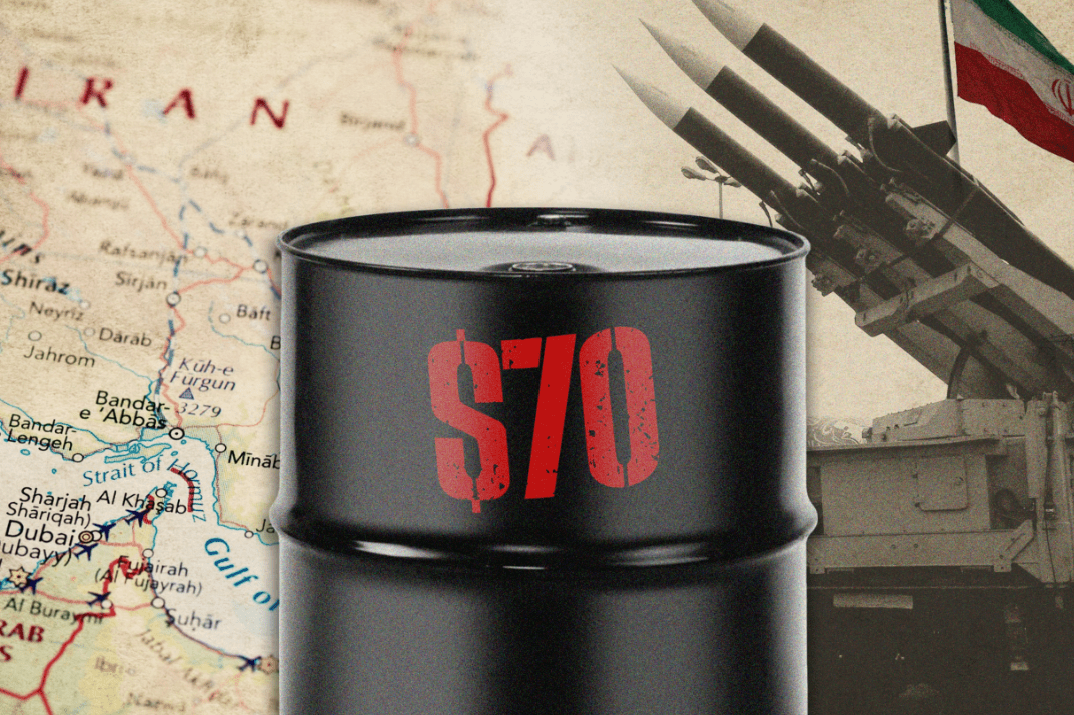

Oil markets are on edge as prices climb toward $70 a barrel, a level analysts say could signal rising geopolitical fear tied to tensions between the US and Iran.
US crude jumped more than 4.5% this week to about $65 per barrel, marking its biggest daily gain since October and pushing prices near the upper end of their recent range. Strategists warn that a move above $70 would likely reflect what one analyst called a “breakout on fear” tied to the risk of military confrontation.
Why $70 Matters
Market watchers see the $70 threshold as a psychological trigger. Oil has spent most of the past year trading between the low and mid $60s. A decisive breakout would suggest traders are rapidly pricing in geopolitical disruption rather than supply and demand fundamentals.
Analysts estimate the fair value of crude based purely on physical supply is closer to $55 to $60, meaning current prices already include a geopolitical risk premium.
Tensions Driving the Risk Premium
The price surge followed comments from US officials that military options remain on the table if nuclear negotiations fail. Vice President JD Vance said Washington prefers diplomacy but emphasised that all options remain available.
Reports also indicated the US has concentrated significant air power in the region, adding to speculation that contingency planning may extend beyond limited strikes.
A key concern is the vulnerability of the Strait of Hormuz, one of the world’s most critical oil transit routes. Any disruption there could instantly tighten global supply and send prices sharply higher.
Policy Constraint: High Oil Undermines US Goals
Despite the military rhetoric, strategists note a major constraint. The administration of Donald Trump has emphasized lowering energy costs. Analysts say a direct strike on Iranian oil infrastructure would likely send prices soaring, conflicting with that policy goal.
Because of that, many expect any potential action to be limited in scope if it occurs at all. Markets therefore remain highly sensitive to headlines rather than confirmed developments.
What Happens Next
Traders now see oil as a real time geopolitical barometer.
If diplomacy advances, prices could fall quickly.
If tensions escalate, crude could spike past $70 in days.
For now, markets are watching every signal from Washington and Tehran. In the current environment, even a single headline can move oil more than supply data.
Disclosure: This article does not represent investment advice. The content and materials featured on this page are for educational purposes only.
Related: Global Stocks Rise as Oil and Gold Jump on Geopolitics and Fed Signals