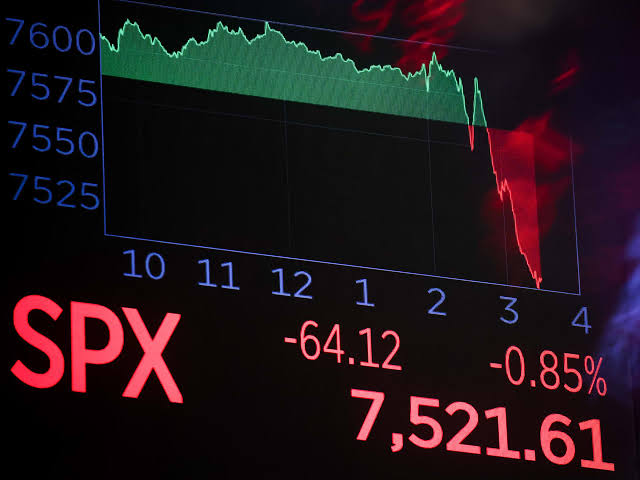

After a brutal selloff wiped roughly $1 trillion from US software giants, founders and investors meeting in Doha say the AI backlash is overdone. The message from the ground: software is evolving, not disappearing, but prices may need to cool.
At Web Summit Qatar, executives pushed back on fears that artificial intelligence will make software as a service obsolete, even as markets reassess lofty valuations following sharp losses in names like Microsoft and Salesforce.
Software adapts, it does not vanish
Arvind Jain, founder of Glean, said AI is best understood as an embedded layer, not a replacement. Products and services will continue, he argued, with winners integrating AI deeply rather than being displaced by it.
That view was echoed by Andrey Khusid, founder of Miro, who said valuations are elevated but likely to normalize within two years. The comparison many drew was the dot com era, when most startups failed but a few became generational leaders.
Investors expect a reset
Venture investors agree the bubble is deflating, especially for large companies. Larry Li of Amino Capital said a correction looks inevitable, even though today’s cycle is more responsible because many firms are generating real revenue.
Markets reflect that tension. Shares of Microsoft and Salesforce rebounded late in the week, but the broader software complex remains volatile as investors question how quickly AI spending turns into profits.
IPOs can wait
Despite speculation that OpenAI and Anthropic could race to public markets, founders in Doha sounded cautious. Khusid said staying private allows for efficiency without public market pressure. Jain added that public investors demand predictability, which clashes with how fast AI markets are changing.
Profitability remains a concern. Many top AI startups are still losing money, with reports that OpenAI could post a $14 billion loss this year. Even so, capital keeps flowing. Forbes estimates more than $340 billion chased global startups in 2025, with over 65% going to AI.
Non AI startups feel the squeeze
Outside AI, founders say fundraising has become tougher. Juan Pablo Ortega of Yuno noted that non AI startups are now benchmarked against AI peers growing at extreme rates, a comparison he says is unrealistic.
US China race, innovation versus scale
On geopolitics, investors framed the AI race as innovation versus scale. The US leads in breakthroughs, while China excels at scaling through supply chains and engineering depth. Most agreed there is room for both closed and open models to grow.
Founders and investors argue the narrative has shifted from software extinction to software evolution. Valuations may reset, IPOs may wait, but the AI buildout continues. Even after the turbulence, the Dow Jones Industrial Average crossing 50,000 underscores that enthusiasm for the AI era is still very much alive.
Disclosure: This article does not represent investment advice. The content and materials featured on this page are for educational purposes only.
Related: Nvidia Jensen Huang: AI Buildout Has 7–8 Years to Run as Demand Stays “Sky High”