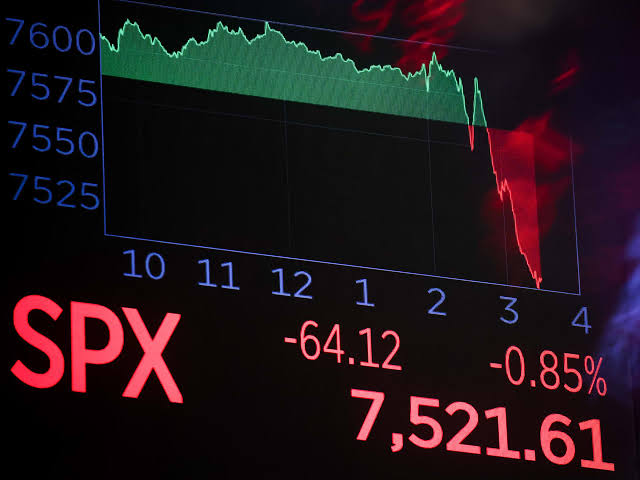

As Wall Street once again releases year-end stock market forecasts, a growing number of analysts are warning investors not to take them too seriously.
Market strategists are predicting where the S&P 500 will finish next year, with the current consensus pointing to an 11% gain in 2026. However, history suggests these forecasts are often unreliable.
Data compiled by Bespoke Investment Group show that since 2000, Wall Street’s consensus forecast has been positive every single year, even during periods when markets later posted sharp losses. Over that period, the S&P 500 declined in seven out of 25 years, including major drawdowns such as the 38.5% crash in 2008 and a 19.4% drop in 2022.
While the average forecasted return of about 9% looks close to the market’s long-term average, the problem lies in accuracy. On average, forecasts missed actual results by more than 14 percentage points per year, meaning errors were often larger than the predictions themselves.
Despite these misfires, banks and brokerages continue to publish confident outlooks. Analysts say bullish forecasts are partly driven by business incentives, as optimism encourages trading activity and investment flows.
Still, even critics acknowledge that market strategists are not careless. Their reports often include valuable insights into economic trends, earnings growth, interest rates, tariffs, and AI-related risks. The issue is that these insights do not translate into reliable numerical predictions.
The column’s central message is simple: no one can consistently predict where markets are headed, especially over a one-year horizon.
Rather than relying on forecasts, investors are encouraged to focus on long-term fundamentals, diversification, and risk management. For long-term investors, broad index funds combined with high-quality bonds remain a practical way to navigate uncertainty. Those closer to retirement or seeking stability may prefer a heavier allocation to bonds or lower equity exposure.
The takeaway is not to fear the market, but to be skeptical of confident predictions. History shows that hope, discipline, and diversification tend to outperform forecasts.
Disclosure: This article does not represent investment advice. The content and materials featured on this page are for educational purposes only.
Related: 6 Charts That Show How Stock Markets Got Reshaped in 2025