
The US Financial Stability Oversight Council (FSOC) has taken a softer stance on crypto in its 2025 annual report, signalling a major shift in Washington’s regulatory tone. The council credited the GENIUS Act, signed into law by President Donald Trump in July, for providing long-awaited federal clarity on stablecoins and crypto assets.
The report marks a sharp departure from FSOC’s earlier warnings about digital assets posing systemic risks. It says the new framework allows banks and institutions to engage in crypto-related activities “consistent with safety, soundness, and existing laws.” The council dropped language used in past reports that labelled stablecoins as highly vulnerable to runs or concentration risks.
Under the GENIUS Act, stablecoin issuers must now follow reserve, disclosure, and compliance standards—bringing them fully under federal oversight. That, analysts say, has transformed crypto from an unregulated threat into a supervised financial segment.
“What changed isn’t that stablecoins suddenly became safe, it’s that the US finally put a federal wrapper around them,” said Yan Ketelers, CMO at Human. tech. “The GENIUS Act gave regulators something concrete to point to. Risks didn’t vanish, but they became governable.”
The FSOC also confirmed that federal banking agencies have rolled back restrictive guidance from 2023, clearing banks to hold digital assets, offer custody services, and participate in tokenization pilots without prior “no-objection” letters.
The report further downplayed concerns about crypto’s link to illicit finance, stating that most blockchain activity is now tied to legitimate use cases.
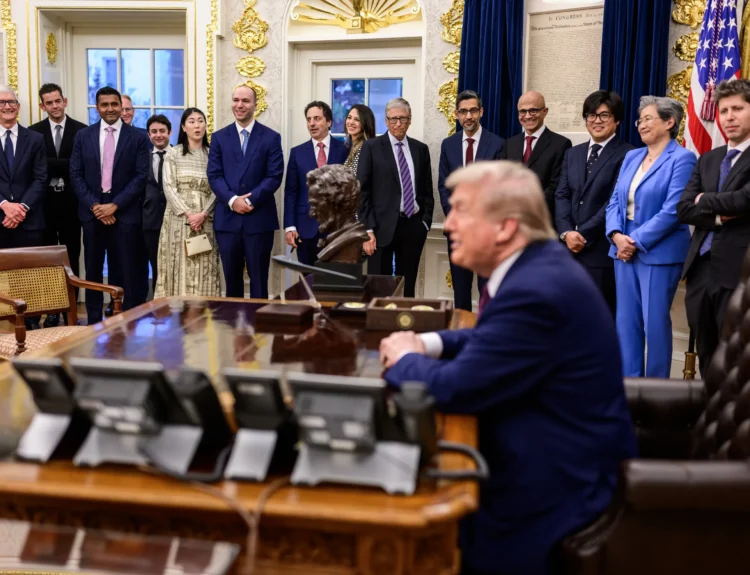
The new approach aligns with President Trump’s goal of integrating crypto into the broader US economy. During the GENIUS Act signing, Trump called it “a landmark step toward restoring American financial leadership.”
While the US now promotes stablecoin innovation, European regulators remain cautious. The UK, however, is preparing similar legislation to bring crypto firms under the Financial Conduct Authority by 2027, mirroring Washington’s direction.
As Will Beeson, CEO of Uniform Labs, put it: “If the US is opening doors to stablecoin growth, other nations can’t afford to keep them closed.”
Related: Bank of Japan to Begin Selling $534B in ETFs, What It Means for Markets and Crypto
Japan Bond Market Explained: Why Yen Carry Trade Still Moves Stocks And Crypto?